

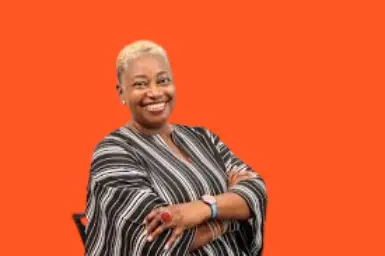
The founder of the Sesor Empowerment Foundation, IER JONATHA ICHAVER, in an interview with News Central, shares further insights into the 2026 appropriation bill on how it impacts the lives of the poor in the country.
Reports have it that less than 1% was allocated to Poverty Alleviation in the 2026 budget of ₦58 trillion. The question remains: Does this ratio impact the average poor in any way, and what can the government do to improve the lives of these people generally?
According to the details of the 2026 appropriation bill, the federal government has allocated less than 1% of the entire national budget to poverty alleviation programs despite the country’s alarming poverty rate and rising cost of living.
Analysts at News Central say this allocation is troubling given that recent data from the 2022 National Bureau of Statistics indicated that 133 million Nigerians were living in multidimensional poverty.
There are rising questions about whether the 2026 budget truly reflects Nigeria’s development priorities.
This revelation comes at a time when citizens are already feeling the weight of new tax policies, subsidy removals, and currency reforms. All of which have intensified economic hardship for low-income households.
“The fact remains that, no matter how much the government allocates to poverty, it may never be able to completely get rid of poverty.
But it is important to live above the poverty line, and this may be achieved by reducing the number of multidimensionally poor people that we have in our country. “
China has the world record of moving the largest number of people out of poverty in such a short time. These are lessons we can learn from other countries on how they did it.
Poverty is tied to insecurity; If the poor are gainfully employed and not desperate, they won’t be easy recruits for non-state actors and violent extremist groups to offer them certain amounts of money.
“It’s a win-win situation. When you take care of poverty, you also take care of insecurity.”
Nigeria has a Ministry of Humanitarian Affairs and Poverty Alleviation, and When 1% is allocated to the federal ministry of humanitarian affairs and poverty alleviation, which is responsible for policies, social protection, and others.
It was reported that about 133 million people live in multidimensional poverty; the problem remains.
“When brandishing poverty as a bag or a small box of Agege bread, which contains Agege bread, this is seen as a tokenistic approach to dealing with poverty.”
Ier Jonathan maintains that we’ve been involved in working with poor people for many years. I also sit on the board of a microfinance NGO that works to support economically active poor women, particularly in business.
And when I saw the article on the budget, the first thought that crossed my mind was that the Nigerian government is not serious.
ICHAVER emphasized that Nigeria keeps on going on about how it is in the international community, and our presidents and governors and everybody, they all run to China. Some of them, I’m sure, have business, investments, and interests there.
China is the country that has enabled to lift the largest number of people out of poverty in history; at least 100 million people have been lifted out of poverty.
Nigeria has on paper a strategy to lift 100 million people out of poverty by 2030. Going by the strategy for poverty alleviation with growth strategies or poverty reductio that they’ve called it.
How do you do that when you don’t have electricity to run an industry?
How do you do that when you’re not encouraging industry and incentivizing manufacturing, the service industry, tourism, and hospitality?
When you study what the Chinese did, for example, there’s a village called Shibadong.
I encourage everyone to read about the story.
You read how they sent in government officials working with experts and targeted poor households.
The Chinese went from house to house. did deep data. Why is this household poor?
Who are the people in this household?
- What is the demographic
- What skills do they have?
- What skills do they lack?
Not only did they do that, but they formed these groups, those that could work, those that could do businesses into corporations.
They connected these rural areas to markets. They ensured that whatever those people were producing, they looked at what they had a comparative advantage in.
That’s a very basic economic concept. And of course, those who are economists in the government.
You look at what you have a comparative advantage in. Some of them could do cash crops, kiwi fruit, and others.
They invested to ensure those people could produce those things at scale, so they could enjoy economies of scale and ensure those goods got to market.
And not only that, they actually secured and guaranteed markets at a good value. and guaranteed that these people could sell these goods, even export these goods at solid prices.
ALSO: Secondary School Students Are Getting A.I Tools To Tackle Complex Tasks
The results were incredible; in some instances, they could lift, and their incomes increased by 30 times, 35 times, and they were able to lift people out of poverty.
This was serious work, to be honest.
Our government doesn’t care, because most of them have second lives abroad.
Many of them have second passports. If they are sick, they’ll just jump on a plane.
Our president does it all the time, so we need to begin to ask ourselves, are we even serious as a country?
And we’ve answered that question in many ways.
In some instances, the Chinese relocated the people; if the area was unstable, unviable, unsafe, or subject to flooding, they would relocate them to a safer location.
In Lagos, for instance, demolitions are taking place left, right, and center.
The recent one is Makoko, without an adequate plan for them to be resettled.
Are they not human beings?
Are they not citizens?
So that’s why when I looked at this thing, I just read it, and I just said we’re not serious.
The government thinks that by banding about figures, billion naira, and saying we’ve allocated money, it’s not just about allocating money, of course, that’s a very minute amount, less than 1%, but it’s about putting in the work, being serious and sincere.

We keep comparing ourselves to all these countries; they’re taxing the people more now. The question we should be asking our federal government is, okay, you’re comparing ourselves to the UK.
the tax days, our tax incidents, we’re comparing ourselves even to China. Is the Chinese president, their senators, or their legislature going abroad for treatment?
There were also social protections put in place, the safety net, where they got micro health insurance.
There was guaranteed access to health insurance, education, and a cash transfer when necessary. in a very transparent way, which we are not seeing.
We don’t even have those safety nets in place. So I do not know how you’re going to lift people out of poverty in Nigeria, if they are really serious, without safety nets in place for those who are the most vulnerable and the most exposed.
people said that the political class has weaponized poverty, and it’s easy to sway the opinions of people who are multi-dimensionally poor when it comes to elections.
The question is whether it is by design and number, and whether they are low-hanging fruit.
Are there little things that can be done to lift people out of poverty?
According to Jonathan, “We don’t run a meritorious system. Unfortunately, we have the ‘oil, ‘ as some call it. Once you’re just dashing out billions every month to states for doing absolutely nothing, your productivity is not going to take place.”
The corruption is through the roof; people steal that money, reallocate it as they like.
We’ve seen all the cases and the scandals with very little consequence.
What now becomes the order of the day is for these political actors to figure out how they perpetuate themselves in power, so that they can continue to access this free oil wealth.
“That’s why they will now apply themselves; they don’t have the competence, capacity, and character. Empathy and compassion are lacking.”
Therefore, they apply their energies to perpetuating themselves in power, which is why you have this alarming figure; it’s even now 139 million estimated by the World Bank.
She said that Our political actors and leaders are busy talking about 2027, instead of getting down to the business of the day.
eventually it becomes by design, because they cannot give what they don’t have. So if you don’t know how to, and the political will to drive it through, or the strength of character, it will now become by design.
“There is low-hanging fruit; infrastructural development is critical; it has to be targeted, then allow people to breathe, as our president once said, make access to markets, and make business easy.“
And for goodness’ sake, the need to stop these demolitions and throwing people into further poverty. We have large populations in the middle belt, in the northeast, and all across the country.
Even here in Lagos, if you drive down that coastal road at night, you will see the masses of people who are displaced. How are they even targeting those people?
To even get that data, Number one, we have the National Bureau of Statistics. Put them to work. We have a ministry of civil servants. What are they doing? more hard work. One of the low-hanging fruit. Let’s get the data.
The Nigerian Bureau of Statistics already has something to start with, take data, and accelerate it.
If you look at the breakdown of this appropriation and what they’ve allocated, you will see that a big chunk of that money is only focused on one state, Zamfara. Are we saying that only Zamfara has poor people?
“I’m not saying that we should not have stuff going to Zamfara, but why not do a targeting at the village or local government level and make sure that every local government has a consolidated poverty alleviation program, completely holistic as we’ve talked about and even pilots in one village or two villages and do that across the nation, and really give it focus and be transparent with it.”

A few months ago, the government said, they had allocated a large amount to poor households, so where’s the data? Which poor households do you know? I deal with a lot of poor people because of the work we do with displaced people and people who are economically active. She said.
She maintains that the poor, you know, not one of them, and we’ve dealt with at least over 100,000 people or more over the years that we’ve been working, I’ve not heard one of them say they have received this thing from the government or they got ABCD from them.
Again, it’s always a palliative culture, because they think it’s a low-hanging fruit. It’s not. It just keeps people enslaved. It makes them poorer and steals their dignity, and does not encourage industry or innovation.
Look at all the technology we’re using. It’s all imported. For example, if America wakes up and decides it is going to shut down access to Facebook and Zoom.
Even though we have it, our national strategy says that they want to encourage innovations in these areas.
The Nigerian government is not serious about these; they are not showing themselves to care about the people, and we do need to see more work going in.
Can the government work on a long-term plan while still providing short-term relief?
Ichaver explained that relief is just the beginning. And one of the things we do not see, which is design poverty alleviation plans for households, for communities, you have to show a very clear pathway to sustainable prosperity for those people, and how you’re going to lift them out of poverty.
She added, You don’t just come with a bag of rice and leave for months. You’ve not communicated, okay, we’re going to give you this bag of rice today. Next week, we’re going to do some training for you on ABCD.
The following week, we’re going to make sure that you get the tools you need, the assets you need to be able to develop and grow, while in the meantime, we’re working on this and that. What that does is give people hope.
But what we are seeing is that there are palliatives, just giving, no communication or pathway, because there is no plan.
And even when they say there is a plan, and they have these strategies, they are not even being cleared to. The assets that need to be made significant investments, in terms of capital and human resources.
Just share brain power and the muscle to get this thing to work, and be there day in and out, and do the work, and stay on topic until you deliver the goods, and that we’re not seeing.
Yes, the palliatives come, but if you give the poor bread this morning, and they don’t know if you’re going to come back in 6 months.
The relief keeps people alive, but you have to do more than relief, and it has to be communicated very clearly. She said.
Does the private sector have a role or an avenue that they can use to bridge the gap in areas that is failings?
Ier Jonathan said the truth is that the government sets the environment in which we all operate.
So the number one and primary duty of the government is to secure the lives and property of the people. And if the people are falling into poverty, the government is not securing their livelihoods in any way or form.
People are dying off from needless things, malnutrition, and all sorts of things. The government has to set its environment so that the private sector and all who are involved. She adds.
Now private sector is already doing a lot in terms of corporate social responsibility in those interventions.
But they can only work within the framework of what the government provides them with, in terms of adhering to certain laws.
She maintains that there had to be incentives. Even till today, there’s no clear law from the government that says to companies or private entities, or even to individuals, that if you donate to social programs or charity, you get tax relief. It’s not clear.
If they don’t set the tone, it’s very difficult for companies to even be incentivized to do more, and they also work within a framework.
There are certain things only the government can do. For example, governments can build roads.
There are some companies that even want to build roads to improve community interaction and improve access to markets.
Even for those who are in the communities.
Companies want to do it, and we keep hearing that when they go to the local government or even state governments to say, ” Let us do this role, they will say no, give us the money to do it, and meanwhile, they don’t have the capacity to do it.
It is called a public-private partnership.
It’s a pity that whatever lessons were learned have not been replicated across the country or the state. If we have an enabling environment, then everyone can work together.
Even the church groups are doing a lot in feeding and empowering the poor.
. We all know they organize all sorts of outreaches.
But religious groups do their part.
The reason we have given the government authority, and we allow them to collect taxes from us, is to protect us and make sure they provide a supportive environment.
If they’re failing, we need to start asking them questions and holding them accountable. Please ask others to step up and do better. If they cannot do better, let Others come in and do a better job.
How important is it to move from consumption to production to get our industries working in order to get these people gainfully employed and reduce poverty in the land?
Jonathan-Ichaver disclosed that one of the reasons I’ve stopped supporting the big major political parties over 20 years ago.
It was because I just thought they were not serious, and the Administration was not serious, because certain issues should be regarded as significant national emergencies.
- pipe-borne water.
- Education, working on your human capital development.
- health.
- the security
These five sectors are very sensitive.
if our government is not ready to really do that.
That’s even more relevant in our context now. If the government is not ready to do the hard work it needs to do, that’s a problem.
In the absence of power.
why not have clear industrial zones that are guaranteed power for a period, so that we can drive job creation?
We have the same situation with children begging on the streets. These are the young people over the years, as far back as the 20s. If someone who was a child in 1999 they are now 30 or in their 40s.
The investments that should have been made, not just money. They’ve always been allocating money for certain things, but there’s a lack of political will.
To get the job done.
The government must have the right people in the right places.
to make sure we have children off the streets begging.
because these are your future terrorists, the future recruits, and they’re the ones now terrorizing the country.
ALSO: Smart school vandalism, and I ask why?
“When I saw that these are our successful administrations were not serious about
it, I knew that we were going to have a problem many years ago. And they’ve allowed this thing to proliferate. Not only has it spread all across the nation. We have this Alamagri culture, a begging culture of people just sitting.”
I recall first being aware of these sometime in 1997. You just see young people waking up, young men, especially able-bodied, just there looking. It’s a security threat.
And apart from that, what are they doing? Now we have them graduating, and what are they doing? Security guards.
Well, nothing wrong with being a security guard.
But if you have the potential to do more, the state should work to help you realize it.
by providing a range of jobs that are below; they’re underemployed.
Those are some of the things that our governments are not looking at. As I said, there’s no pathway for any segment of the population to do well.
even the quote-unquote elderly, those who have retired.
We have school teachers. This is latent skills, knowledge that is just there, wasting. What about even having programs for elderly people to be able to transfer those skills to younger people?
In her conclusion.
she said These are things that they should come up with, ideas, but there’s no political will to follow through. Sometimes, you have the wrong people who are heading those programs.
We put the wrong people in the wrong jobs.
because they helped a particular governor, a president, or whoever win an election. We need to become a merit-based society.
1 thought on “2026 budget and poverty Alleviation: If This Children Begging Are Not Off The Streets, They May Become Your Future Terrorists In The Country, Terrorizing The Society.-JONATHA”