

Coding bootcamps are there to bridge the gap between theory and practice. Here are the best coding bootcamps for university students worldwide.
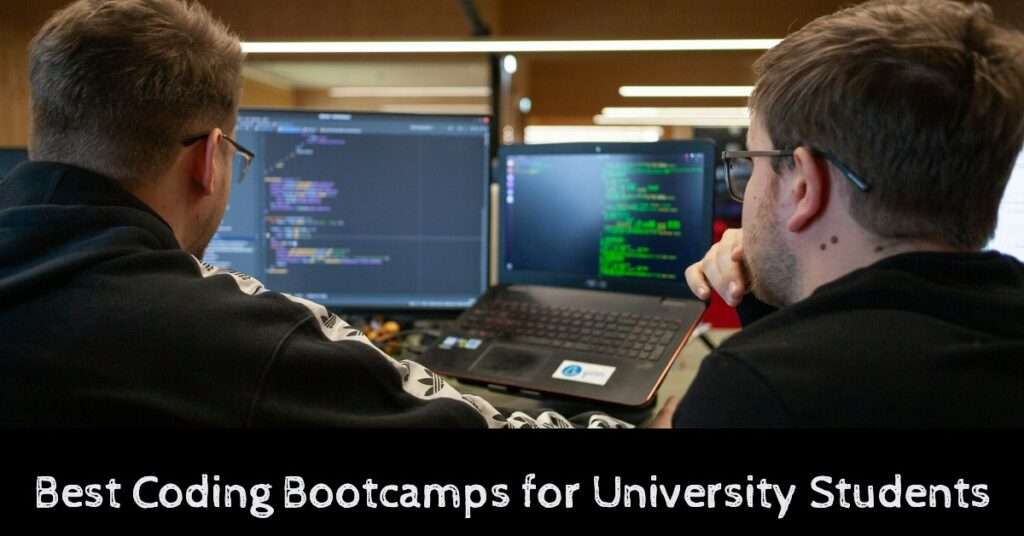
Global higher education institutions undoubtedly provide a phenomenal foundation in computer science theory, algorithms, and advanced mathematics. However, the rapidly evolving tech industry demands highly practical, immediately deployable skills that traditional university curricula often struggle to provide. Consequently, ambitious undergraduates no longer wait until graduation to build their professional portfolios. Instead, they actively enroll in intensive training programs to supplement their formal degrees. Specifically, the demand for flexible, high-impact coding bootcamps for university students has skyrocketed worldwide.
Because university schedules inherently feature chaotic lecture times, strict assignment deadlines, and stressful examination periods, not every bootcamp fits the undergraduate lifestyle. Therefore, students require specialized programs that offer part-time flexibility, asynchronous learning modules, or highly affordable tuition structures. Furthermore, these programs must deliver tangible results by equipping students with modern frameworks such as React, Node.js, and Python.
In this comprehensive analysis, we will meticulously explore the absolute best coding bootcamps for university students currently operating across the globe. We will strictly evaluate their specific pedagogical models, pricing structures, and overall compatibility with rigorous academic timetables.
The Essential Criteria for Student-Friendly Bootcamps
Before diving into specific platforms, we must clearly define exactly what makes a bootcamp suitable for an active university student.
Firstly, schedule flexibility remains the absolute paramount concern. Because undergraduates cannot abandon their primary degree programs, they fundamentally require part-time or entirely self-paced options. Consequently, programs that demand 80 hours a week simply will not work.
Secondly, financial accessibility plays a critical role. Since most students live on tight budgets or rely on student loans, massive upfront tuition fees often present an insurmountable barrier.
Therefore, the most attractive coding bootcamps for university students frequently offer Income Share Agreements (ISAs), deferred tuition, or heavily discounted student rates.
Moreover, the curriculum must directly align with current market demands without duplicating the theoretical groundwork students already receive at university.
Specifically, the ideal bootcamp bypasses basic computer science history and dives straight into agile development, version control (Git), and modern deployment pipelines.
Ultimately, by carefully balancing these rigorous criteria, we can identify the global institutions that genuinely empower young academics to launch lucrative tech careers concurrently with their studies.
Standout Stat: A recent 2025 global tech education survey revealed that over 35% of actively enrolled computer science undergraduates now complete an independent, practical coding bootcamp before receiving their formal university diplomas.
Top Coding Bootcamps for University Students Worldwide
Now, let’s explore the top coding bootcamps for undergraduates and postgraduates around the world:
1. Le Wagon: The Global Powerhouse for Part-Time Learning

When discussing premium global tech education, Le Wagon consistently ranks at the absolute pinnacle.
Founded originally in Paris, this phenomenal institution has aggressively expanded to over forty cities worldwide, ranging from Berlin and London to Tokyo and São Paulo. Consequently, it offers university students an unparalleled international alumni network.
While Le Wagon originally built its formidable reputation on an intensive nine-week immersive program, they brilliantly introduced a twenty-four-week part-time track specifically designed for working professionals and full-time students.
Furthermore, this part-time structure allows undergraduates to dedicate their evenings and weekends to mastering full-stack web development or data science without sacrificing their university attendance.
Because Le Wagon emphasizes a highly collaborative, project-based curriculum, students spend most of their time building actual web applications rather than listening to passive lectures.
Specifically, they learn Ruby on Rails, JavaScript, and essential database management. Ultimately, for university students seeking a globally recognized credential and a highly supportive, vibrant community, Le Wagon provides a truly world-class, transformative educational experience.
2. App Academy: Pioneering Financial Accessibility
For many undergraduates, the sheer financial cost of supplementary education abruptly halts their ambitions. To directly solve this massive systemic issue, App Academy famously pioneered the Income Share Agreement (ISA) model within the bootcamp industry. Consequently, they removed the terrifying financial risk from the student’s shoulders.
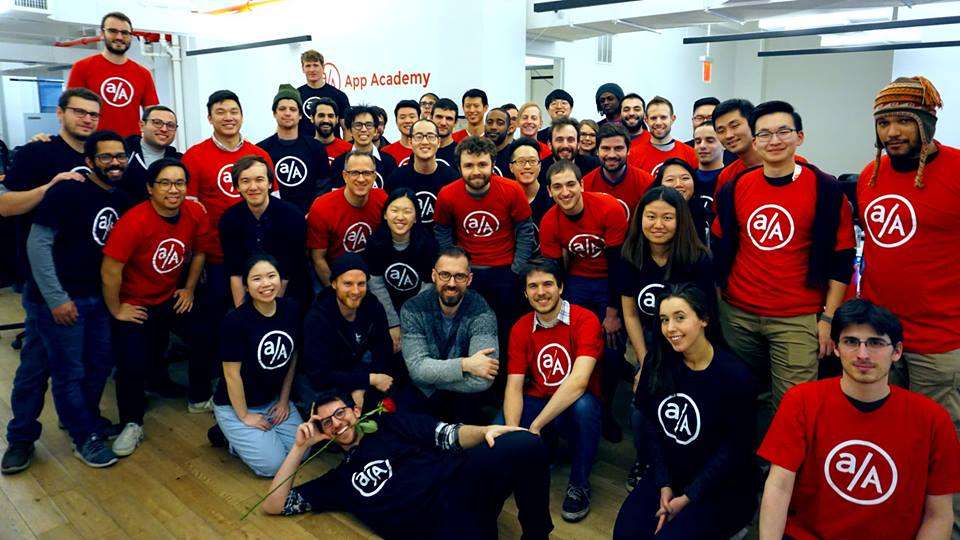
Under this innovative financial structure, students pay absolutely no upfront tuition fees to attend the rigorous software engineering program. Instead, they legally agree to pay a set percentage of their future salary only after they secure a tech job earning above a specific income threshold.
Therefore, App Academy strongly aligns its own institutional success directly with the students’ professional success. Furthermore, they offer a highly flexible, part-time online software engineering program that perfectly accommodates chaotic university timetables.
Because the curriculum is notoriously difficult and heavily focused on advanced JavaScript, React, and Python, students graduate with skills that rival mid-level developers.
Specifically, this bootcamp is well-suited to highly disciplined undergraduates who lack immediate financial capital but possess the intense drive to master complex software architecture over a twenty-four-week period.
Related: How Students Are Making Money Through Tech in Nigeria
3. Springboard: Asynchronous Learning and 1-on-1 Mentorship
While live, synchronous classes work well for some, many university students drastically prefer learning strictly on their own schedule. Consequently, Springboard dominates the market for self-paced, asynchronous tech education.
Because their curriculum does not require students to log in at specific times, undergraduates can easily pause their bootcamp progress during grueling university midterm exams and accelerate their learning during long holiday breaks. Therefore, this extreme flexibility makes Springboard one of the most practical coding bootcamps for university students globally.
Moreover, Springboard aggressively solves the primary drawback of self-paced learning: terrifying isolation. They systematically pair every single enrolled student with a dedicated, senior industry mentor.
Specifically, students engage in weekly one-on-one video calls with seasoned engineers at major tech companies such as Google, Amazon, and Meta. During these personalized sessions, mentors brutally review code, offer deep architectural insights, and provide invaluable career guidance.
Ultimately, by seamlessly combining asynchronous curriculum delivery with elite, personalized mentorship, Springboard guarantees that students never stall on complex technical problems.
“The future of education is hybrid. Students increasingly demand the intellectual depth of a traditional university degree securely combined with the rapid, job-ready execution of an elite coding bootcamp.”
4. 42 Network: The Revolutionary Tuition-Free Model
If traditional bootcamps seem too commercialized, the 42 Network offers a completely radical, highly effective alternative. Originally launched in France and now operating major campuses globally—including locations in Silicon Valley, Abu Dhabi, and Kuala Lumpur—Ecole 42 completely destroys the traditional educational paradigm. Remarkably, this institution charges absolutely zero tuition fees. Furthermore, it completely eliminated traditional teachers, scheduled classes, and standardized testing from its curriculum.

Instead, 42 aggressively utilizes a peer-to-peer, gamified learning methodology. Because the campus remains open twenty-four hours a day, seven days a week, university students can easily walk in and code whenever their official lecture schedule permits.
Specifically, students advance through a massive tree of complex software engineering projects by collaborating intimately with their peers and successfully evaluating each other’s code. Consequently, this unique system forces students to develop profound problem-solving abilities and exceptional communication skills.
Ultimately, for deeply motivated undergraduates seeking a financially free, intensely rigorous alternative to standard coding bootcamps for university students, 42 remains an absolute masterpiece of educational design.
5. General Assembly: The Industry Standard for Diverse Tech Skills

When global corporations seek verified tech talent, they frequently recruit directly from General Assembly. As one of the oldest and most universally respected tech education providers, General Assembly boasts a massive physical and digital footprint.
Consequently, their part-time, remote-friendly courses serve as an incredible resource for undergraduates looking to aggressively expand their technical repertoire. While they certainly offer phenomenal software engineering tracks, they also excel in teaching adjacent, highly lucrative digital skills.
Furthermore, university students majoring in non-technical fields—such as psychology or business—frequently leverage General Assembly to pivot into User Experience (UX) Design or Data Analytics. Because the part-time courses typically require only a few evenings a week, students can seamlessly maintain their academic GPA while acquiring highly specialized, industry-approved certifications.
Specifically, General Assembly’s massive global alumni network actively helps young undergraduates bypass automated resume screeners and secure lucrative summer internships at top-tier international tech firms. Therefore, it stands as an incredibly safe, reliable investment for any ambitious student.
6. Codecademy Pro: The Budget-Friendly Stepping Stone
Not every university student actually needs or wants a high-stakes, multi-thousand-dollar bootcamp experience immediately. Sometimes, they simply require a highly structured, interactive environment to master the absolute basics before committing to a larger program. Consequently, Codecademy has beautifully positioned itself as the ultimate introductory platform. While they offer a robust free tier, their “Pro” and “Intensive” career paths provide a remarkably affordable, bootcamp-lite experience that perfectly suits undergraduate budgets.
Specifically, for a minor monthly subscription fee, students unlock comprehensive, deeply interactive courses in Full-Stack Engineering, Data Science, and Cybersecurity. Because the platform runs directly in the browser, students do not waste frustrating hours configuring complex local development environments. Furthermore, they can code for fifteen minutes between university lectures or grind for six hours on a Sunday afternoon.
Ultimately, Codecademy serves as an essential, low-risk testing ground. It allows students to practically verify their genuine passion for software development before they aggressively invest substantial capital into premium coding bootcamps for university students.
7. SheCodes: Empowering Female Undergraduates in Tech
The global technology industry still unfortunately suffers from a massive, well-documented gender disparity. To proactively combat this systemic issue, SheCodes has built a phenomenal, highly accessible coding bootcamp explicitly designed for women. Consequently, thousands of female university students worldwide currently utilize this platform to confidently break into software engineering.

Because SheCodes deliberately creates a highly supportive, intimidation-free online environment, it dramatically lowers the psychological barrier to entry for young women exploring computer science for the first time.
Furthermore, SheCodes recognizes the financial constraints of higher education and actively provides heavy discounts and specific scholarships for full-time university students. Their curriculum logically progresses from basic HTML/CSS in their beginner workshops up to complex React development in their advanced “SheCodes Pro” track. Specifically, the asynchronous lessons are tightly structured with strict weekly homework deadlines, thereby keeping students highly accountable without completely overwhelming their university schedules.
Ultimately, SheCodes successfully blends premium technical education with aggressive community empowerment, making it a stellar choice for female undergraduates worldwide.
Standout Stat: Bootcamp graduates currently report an average salary increase of over 50% in their first tech role compared to their previous employment, proving the aggressive financial ROI of practical skills training.
8. ALX: High-Impact, Sponsored Tech Training
While discussing global platforms, we must explicitly highlight institutions that democratize tech education across developing regions. ALX has rapidly emerged as a massive, world-class talent accelerator, specifically focused on equipping African youth with elite digital skills. Consequently, they operate one of the most impactful coding bootcamps for university students on the entire continent and globally.
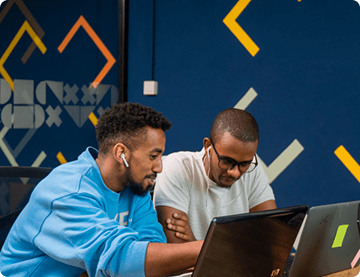
Because ALX strategically partners with major global entities like the Mastercard Foundation, they can frequently offer their rigorous software engineering programs at heavily subsidized rates or entirely for free to eligible young leaders.
Furthermore, the ALX curriculum is notoriously demanding. It requires students to dive deeply into low-level programming with C, master Linux system administration, and eventually build complex full-stack web applications. Because the program demands extreme resilience and intensive daily commitment, university students often participate during their extended academic strikes or structured gap years.
Specifically, ALX actively integrates mandatory leadership and soft-skills training into its technical curriculum. Therefore, graduates do not just know how to write clean code; they effectively know how to lead engineering teams and build scalable, globally competitive digital products.
9. Nucamp: The Champion of Affordable, Part-Time Learning
While many premium educational platforms charge exorbitant tuition fees, Nucamp aggressively disrupts the traditional pricing model. Consequently, it consistently ranks among the most financially accessible coding bootcamps for university students globally. Because Nucamp deliberately utilizes a hybrid learning approach, it effectively keeps its operational overhead incredibly low. Therefore, they securely pass these massive financial savings directly onto the enrolled students.
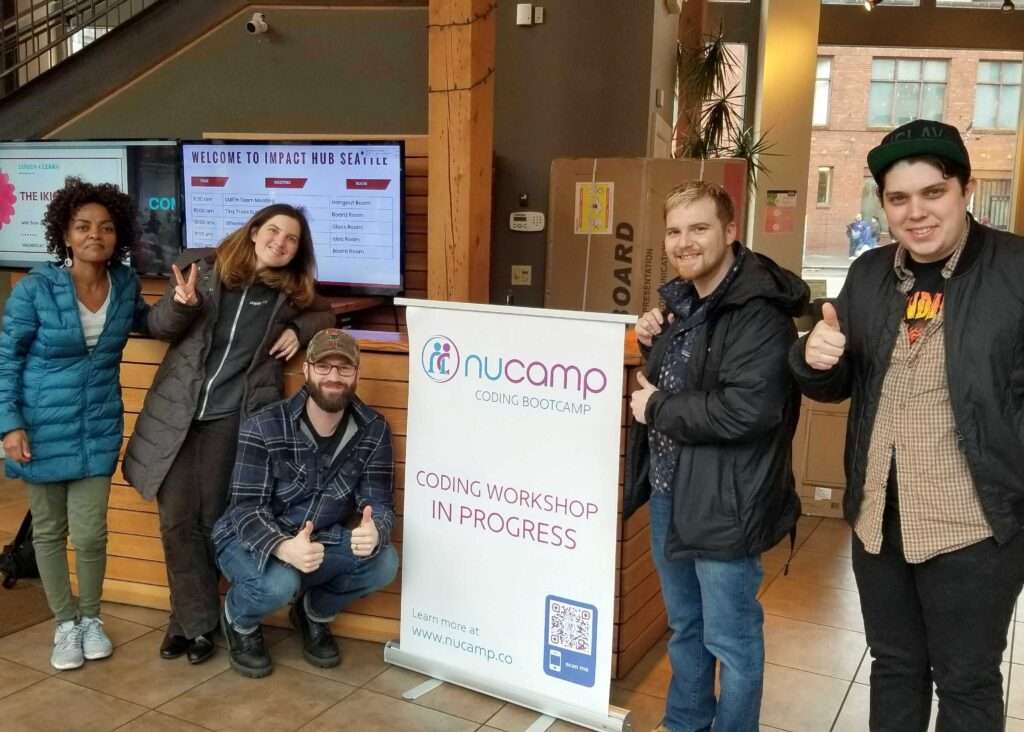
Furthermore, the curriculum perfectly aligns with the chaotic, unpredictable lifestyle of a typical undergraduate. Specifically, students independently consume asynchronous video lectures during the busy week and subsequently attend live, highly interactive coding workshops on the weekends.
Moreover, Nucamp actively builds supportive, localized community pods. Because they meticulously organize small study groups within specific geographic regions or time zones, students never feel completely isolated. Therefore, an undergraduate studying in Lagos or London can easily collaborate with local peers to aggressively debug complex React applications on a Saturday morning.
Ultimately, this program brilliantly democratizes premium tech education, allowing students to acquire industry-ready full-stack skills without incurring crippling, long-term educational debt.
Read: Student Builds App That Solves UNILAG Hostel Crisis
10. freeCodeCamp: The Ultimate Open-Source Training Ecosystem
Although commercial platforms heavily dominate the modern tech education market, freeCodeCamp boldly operates as a massive, globally recognized nonprofit entity. Consequently, it completely eliminates all financial barriers, decisively cementing its status as one of the most essential coding bootcamps for university students worldwide.
Because the entire platform is completely open-source and fiercely driven by a massive volunteer developer community, undergraduates rapidly access thousands of hours of premium curriculum absolutely free of charge. Furthermore, the pedagogical structure aggressively emphasizes practical, hands-on building over passive theoretical reading.
Specifically, students must systematically conquer dozens of complex data structures and deploy fully functional web applications to officially earn their verified certifications. Because these rigorous, project-based certifications carry significant professional weight in the global tech industry, international hiring managers aggressively recruit freeCodeCamp alumni.
Therefore, a highly disciplined university student can seamlessly utilize this asynchronous platform during their long semester breaks to systematically build a formidable GitHub portfolio. As a result, freeCodeCamp fundamentally proves that elite technical proficiency strictly requires relentless personal dedication rather than an expensive, elite institutional pedigree.
Standout Stat: Over 40,000 freeCodeCamp alumni currently work at elite global tech companies, perfectly demonstrating that open-source, self-paced coding bootcamps for university students directly deliver incredibly high-value corporate employment outcomes.
Balancing University Timetables with Intensive Bootcamps
Enrolling in a bootcamp while actively pursuing a full-time university degree requires absolutely ruthless time management. Consequently, students must proactively design strict, uncompromising weekly schedules to survive the dual workload.
Because the cognitive demand of learning complex algorithms at university perfectly combines with learning modern frameworks at a bootcamp, the brain frequently suffers from intense fatigue. Therefore, undergraduate students must aggressively prioritize their tasks and deliberately eliminate time-wasting distractions.
Specifically, successful students utilize sophisticated digital planners like Notion or Google Calendar to map out exactly when they will attend lectures, complete university assignments, and tackle bootcamp projects. Furthermore, they actively communicate with their bootcamp instructors regarding their university exam periods, often requesting slight deadline extensions during midterms.
Ultimately, the students who successfully navigate this demanding path treat their bootcamp not merely as a casual hobby, but as a rigid, non-negotiable professional commitment. This intense discipline inevitably forges highly resilient software engineers who can easily handle the extreme pressures of the modern tech industry.
The Clear ROI of Coding Bootcamps for University Students
Naturally, skeptics frequently question whether completing a bootcamp alongside a degree is genuinely worth the immense effort and financial cost. The data, however, overwhelmingly confirms the aggressive Return on Investment (ROI).
Consequently, university graduates who possess both a formal degree and a verified bootcamp certificate boast a massive, undeniable competitive advantage in the global job market. Because corporate recruiters desperately want candidates who understand both deep computer science theory and practical deployment pipelines, these dual-trained students rarely struggle to secure lucrative employment.
Furthermore, completing a bootcamp clearly demonstrates extreme self-motivation and an aggressive willingness to learn outside the standard curriculum. Specifically, while a standard university graduate might showcase a theoretical thesis on graduation day, a bootcamp graduate proudly presents a live, fully functional web application complete with a connected database and user authentication.
Therefore, hiring managers instantly recognize the immediate value the bootcamp graduate brings to the engineering team. Ultimately, the short-term stress of managing both educational pathways directly translates into higher starting salaries, faster promotions, and supreme job security in an increasingly competitive global economy.
Conclusion
In conclusion, the traditional university computer science degree is absolutely not obsolete; however, it is no longer entirely sufficient on its own. As the global tech industry accelerates at an unprecedented pace, ambitious undergraduates must proactively bridge the gap between academic theory and practical execution. From the peer-to-peer revolution of the 42 Network to the heavily mentored, asynchronous tracks of Springboard, the landscape of coding bootcamps for university students has evolved brilliantly to meet this exact demand.
Consequently, students now possess the incredible power to completely customize their educational journey. Whether they leverage the Income Share Agreements of App Academy to avoid upfront debt or join the massive global alumni network of General Assembly, these intensive programs decisively forge the ultimate technical profile.
Therefore, if you are a current university student looking to permanently secure your place in the digital economy, absolutely do not wait until you hold your diploma. Start researching these elite programs today, write your first lines of practical code, and aggressively build the future you deserve.
Recommended:
How to Apply for Chevening Scholarship (2026/2027 Guide)
Young talented Nigerian students BUILD A MINI SPORTS car on campus
Top 20 Fully Funded Scholarships in the UK for International Students (2026/2027)