
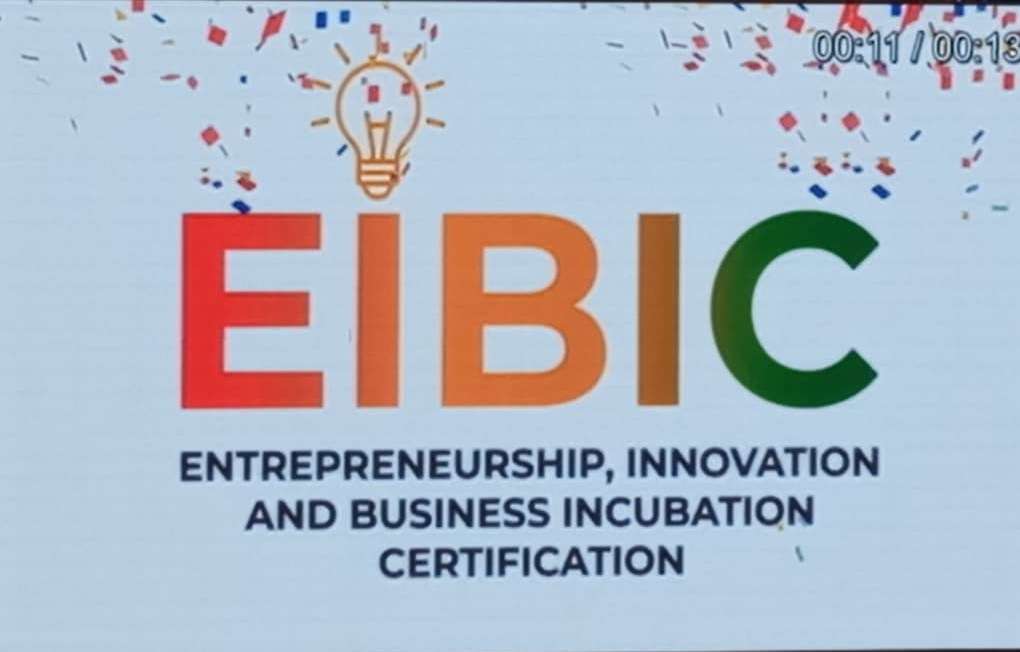
The Federal Government of Nigeria launches EIBIC programme as a transformative initiative designed to reshape higher education across the nation. This landmark development, officially inaugurated by the government, introduces the Entrepreneurship Innovation and Business Incubation Certificate to universities and polytechnics nationwide.
The initiative signals a fundamental shift from traditional classroom learning toward practical entrepreneurial training that prepares students for real-world business challenges.
The timing proves critical, as Nigeria’s unemployment rate remains persistently high, particularly among young graduates seeking meaningful employment. Rather than waiting passively for job opportunities, the government has decided to foster a culture of job creation through structured entrepreneurial training.
This initiative demonstrates Nigeria’s commitment to transforming tertiary institutions into innovation hubs where students conceptualize, develop, and launch viable business ventures before graduation. The decision reflects a comprehensive understanding of contemporary economic realities and youth aspirations for meaningful careers and wealth creation.
Understanding the EIBIC Programme Framework
When Nigeria launches EIBIC programme, participating institutions receive a comprehensive curriculum framework designed to complement existing degree programmes. This certificate programme emphasizes practical application, hands-on training, and real-world business scenarios rather than purely theoretical knowledge. Students gain exposure to multiple facets of entrepreneurship through structured learning experiences.

The framework includes business plan development, market research methodologies, financial management, and digital marketing strategies. Participating tertiary institutions establish dedicated incubation centers within their campuses, serving as physical spaces where students develop business ideas, access technology resources, and collaborate with peers. The programme creates meaningful linkages between students and external stakeholders, including financial institutions, government agencies, and private sector enterprises.
The implementation structure incorporates several key components. First, institutions designate dedicated incubation centers as hubs for entrepreneurial activity. Second, tertiary institutions introduce standardized coursework focused on entrepreneurial competencies. Third, the initiative establishes explicit connections among students, mentors, investors, and industry professionals. This comprehensive approach ensures students receive multifaceted support for their entrepreneurial journeys.
Key Objectives Behind the Programme
The Federal Government designed this initiative with several specific objectives in mind. Chief among these is reducing graduate unemployment by promoting self-employment and business creation. The underlying goal emphasizes equipping graduates with capability and confidence to establish their own enterprises rather than solely pursuing traditional employment opportunities.
Additionally, the government seeks to diversify Nigeria’s economy beyond oil dependency. By fostering innovation and entrepreneurship in tertiary institutions, policymakers hope to generate new business sectors and employment opportunities across various industries. This approach directly addresses long-term economic sustainability concerns that challenge Nigeria’s development trajectory and competitive positioning.
Furthermore, the programme enhances the relevance of tertiary education to contemporary labor market demands. Employers increasingly seek graduates possessing practical skills, problem-solving abilities, and innovation capabilities. The initiative bridges this critical gap between academic preparation and industry requirements, ensuring graduates meet employer expectations. Education becomes more aligned with economic realities and workplace demands.
The programme additionally supports Nigeria’s Vision 2030 agenda, which prioritizes inclusive economic growth and human capital development. By introducing entrepreneurial training at the tertiary level, the government invests in future leaders and innovators who will drive national development. This strategic alignment ensures programme implementation as part of coherent national development planning.
Implementation Strategy: How Nigeria Launches EIBIC Programme Across Institutions
Nigerian tertiary institutions have begun implementing the initiative through a coordinated approach supervised by regulatory bodies. The National Universities Commission (NUC) and the National Board for Technical Education (NBTE) provide oversight, ensuring consistency across participating institutions. These regulatory bodies establish minimum standards and quality benchmarks for implementation.
Each participating institution designates a lead coordinator responsible for programme administration and day-to-day operations. These coordinators establish entrepreneurship centers equipped with computers, internet connectivity, and collaborative workspaces. Moreover, institutions recruit experienced entrepreneurs and business mentors to guide student ventures through development stages. Institutional commitment becomes evident through resource allocation and infrastructure investment.
The certificate integrates into existing academic structures without replacing core degree requirements. Students typically complete the programme over two to three academic years through coursework, workshops, and mentorship sessions. Some institutions offer it as an elective, while others make it mandatory for all students. This flexibility accommodates diverse institutional contexts and student interests.
Importantly, the implementation strategy emphasizes accessibility and inclusivity. The programme does not impose significant additional costs on students, ensuring financial constraints do not prevent participation. Government funding supports infrastructure development, trainer compensation, and ongoing operational expenses. Accessibility becomes a foundational principle ensuring equitable opportunity for all students regardless of socioeconomic background.
Curriculum Content and Learning Outcomes
When institutions implement the programme, comprehensive curriculum covers essential entrepreneurial competencies organized into distinct modules. The foundation module introduces entrepreneurship concepts, historical case studies, and contemporary business models. Students examine successful entrepreneurs across various industries and geographic regions, gaining inspiration and practical insights.
Subsequently, students progress to the business development module, which teaches systematic approaches to identifying market opportunities and validating business ideas. This component requires students to conduct market research, analyze competitors, and understand customer needs before developing comprehensive business plans. Emphasis on validated business models ensures students develop realistic, market-tested ventures.
Financial literacy forms another critical curriculum component. Students learn accounting principles, financial forecasting, and capital acquisition strategies. They understand different funding sources, including personal savings, bank loans, venture capital, and government support schemes. The curriculum ensures students can prepare financial statements and interpret financial data essential for business operations and investor communications.
Additionally, institutions include modules on digital entrepreneurship, recognizing Nigeria’s growing digital economy. Students explore e-commerce platforms, digital marketing channels, and technology-enabled business models. This component proves particularly relevant as young Nigerians increasingly establish online businesses addressing local and international markets.
The programme also incorporates soft skills development as essential learning outcomes. Students enhance communication abilities, leadership competencies, and teamwork capabilities necessary for business success. These interpersonal skills complement technical business knowledge, creating well-rounded entrepreneurs prepared for diverse challenges.
Support Systems and Resources Available to Students
Participating students benefit from multiple support systems embedded within the programme framework. Dedicated entrepreneurship centers provide physical workspace, technology infrastructure, and networking opportunities. These centers function as complete entrepreneurial ecosystems where innovation flourishes through collaborative engagement and peer learning.
The programme connects students with experienced mentors providing guidance, strategic advice, and industry connections essential for venture development. Mentors review business plans, offer constructive feedback, and facilitate introductions to potential investors or partners. Mentorship becomes a cornerstone service differentiating the initiative from traditional academic programmes.
Institutions arrange regular workshops, seminars, and networking events where successful entrepreneurs share experiences and insights. These interactions expose students to diverse business perspectives and inspire entrepreneurial ambitions. These networking opportunities create valuable connections between students and established business professionals who serve as role models and potential collaborators.
Participating institutions establish partnerships with financial institutions and government agencies. Students gain access to preferential lending programs, grants, and other financial incentives designed specifically for young entrepreneurs. The Nigerian government supports participating institutions through direct funding and policy support mechanisms. These financial resources become crucial enablers of student venture creation and business sustainability.
Expected Impact on Graduate Employment and Economic Development
Nigeria launches EIBIC programme anticipating substantial impacts on employment landscapes and economic trajectory. By promoting self-employment among graduates, the initiative reduces pressure on formal job markets while generating new economic opportunities across sectors. Employment generation becomes distributed throughout the economy rather than concentrated in limited formal sectors.
Research from similar programmes globally demonstrates that entrepreneurial training significantly increases business creation rates among young people. Graduates of such programmes establish ventures at substantially higher rates than peers without entrepreneurial education. Moreover, these businesses generate employment for additional workers, creating multiplicative economic effects throughout communities and regions.
Furthermore, the programme fosters innovation-driven economic development rooted in local contexts. Student entrepreneurs develop solutions addressing domestic challenges, creating businesses grounded in Nigerian realities and communities. This approach generates more sustainable and culturally relevant enterprises compared to imported business models that may lack contextual fit or local understanding.
The programme strengthens Nigeria’s competitive position within African and global economies. As tertiary institutions produce graduates with entrepreneurial capabilities, Nigeria attracts investment, talent, and business opportunities. The nation positions itself as a destination for innovation and entrepreneurship, enhancing its economic competitiveness and attracting international attention.
Challenges and Implementation Considerations
Despite its promising framework, several implementation challenges emerge requiring strategic attention. Funding sustainability remains a primary concern, as establishing and maintaining entrepreneurship centers requires consistent financial resources. Institutions operating under budget constraints may struggle to provide adequate infrastructure and comprehensive support systems to all interested students.
Additionally, faculty capacity presents a significant challenge as not all tertiary institution educators possess entrepreneurial experience or modern training delivery expertise. Targeted professional development programmes become necessary to equip instructors with contemporary entrepreneurial knowledge and mentoring skills. Investment in teacher training ensures programme quality and effectiveness across institutions.
Furthermore, institutional culture shifts necessary for programme success require time and sustained commitment from leadership. Some institutions prioritize traditional academic approaches, viewing entrepreneurship as ancillary to core educational missions. Changing these perspectives demands consistent advocacy and compelling demonstration of programme value and student outcomes.
Broader systemic challenges also emerge, including inadequate access to startup capital and underdeveloped business ecosystems in some regions. While the programme provides training and mentorship, students need functioning markets and robust financial systems to translate ideas into operating businesses. These systemic factors extend beyond institutional control but require parallel interventions.
Success Stories and Early Outcomes
Several Nigerian tertiary institutions have already demonstrated positive results through programme implementation. Students participating in pilot phases have launched viable businesses in sectors ranging from agricultural technology to digital services. These early successes validate the programme’s pedagogical approach and student entrepreneurial capability.
Some student entrepreneurs have attracted investor interest and secured seed funding for their ventures. These achievements provide concrete evidence that the initiative generates tangible economic activity. Successful student entrepreneurs serve as powerful role models, inspiring peers to pursue entrepreneurial pathways and demonstrating realistic possibilities for young graduates.
The programme catalyzes collaboration between tertiary institutions and private sector organizations. Corporations recognize the value of investing in early-stage entrepreneurs who may eventually become business partners, suppliers, or customers. These partnerships strengthen the entrepreneurial ecosystem surrounding participating institutions and create sustainable support networks extending beyond campus boundaries.
Government Support and Policy Environment
The Nigerian government provides substantive support mechanisms ensuring programme sustainability and effectiveness. Beyond initial inauguration, policymakers allocate budgetary resources for infrastructure development and programme operations. Government backing provides credibility and resources essential for widespread institutional adoption and stakeholder confidence.
Federal agencies coordinate with tertiary institutions to align programme implementation with broader economic development objectives. This coordination ensures consistency across institutions and enables knowledge sharing regarding best practices. The government facilitates connections between student entrepreneurs and support agencies providing business registration, licensing, and compliance assistance.
Additionally, the government explores mechanisms for preferential access to government procurement and support schemes. Young entrepreneurs who complete the programme may receive consideration for government contracts, grants, and other opportunities. This policy approach creates material incentives for programme participation and entrepreneurial pursuit among students.
Conclusion
The Federal Government’s decision to launch this transformative initiative represents a fundamental shift in Nigeria’s approach to tertiary education with far-reaching implications. By integrating entrepreneurial training into higher learning institutions, Nigeria addresses multiple challenges simultaneously—graduate unemployment, economic diversification, and human capital development. Students gain practical skills, entrepreneurial mindsets, and support systems necessary for business creation.
As the initiative expands across Nigerian tertiary institutions, it promises to reshape the relationship between higher education and economic development. Success requires sustained commitment from government, educational institutions, and private sector partners. Adequate funding, institutional collaboration, and continued support for student entrepreneurs beyond graduation remain essential for realizing the programme’s transformative potential. Ultimately, when implemented comprehensively, this initiative positions Nigeria for inclusive, innovation-driven economic growth benefiting millions of young people and strengthening the nation’s economic future.
Recommended:
10 Free AI Education Platforms from Tech Giants Worth Thousands in Value
How Students Are Making Money Through Tech in Nigeria
YEIDEP 2026: Recruitment, Registration, and Everything You Should Know Before You Apply