
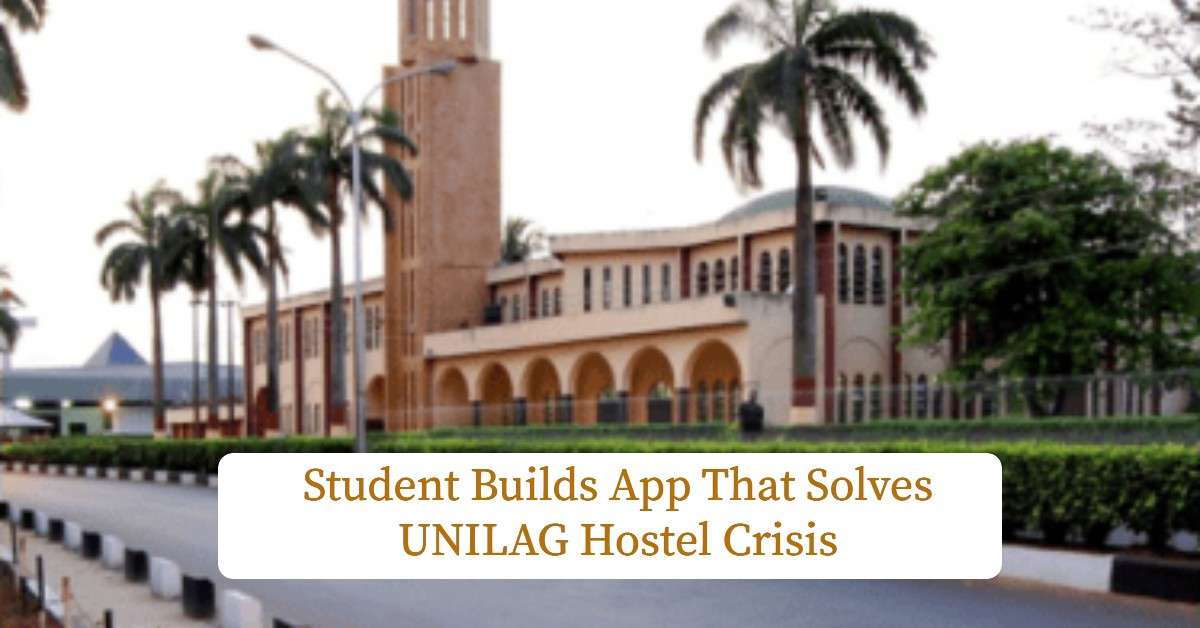
Something is broken at the University of Lagos. Over 30,000 students jostle for about 8,000 bed spaces every academic session. In the 2024/2025 academic session alone, UNILAG had 35,177 full-time undergraduate students — far more than the available spaces could accommodate. Even if all 10,000 estimated bed spaces were accessible to undergraduates, it would still fall short by tens of thousands. That’s a real UNILAG hostel crisis.
The balloting portal crashes. Students lose sleep refreshing their screens at midnight. Racketeers sell a bed space for between ₦240,000 and ₦300,000, while a squatting space goes for as high as ₦180,000. Meanwhile, a bed space at the ULWS female hostel costs between ₦660,000 and ₦1.02 million, and at El-Kanemi, a bed in a four-man room costs ₦710,000.
This is the environment that is pushing UNILAG students — particularly those studying computer science and software engineering — to build the systems their university hasn’t.
The Scale of the Problem
To understand why a student would spend months coding an allocation app instead of studying for exams, you first need to understand how severe this crisis really is. Every academic session, thousands of students participate in a ballot for limited hostel spaces, and many do not even stand a chance.
UNILAG does not publicly disclose the exact number of bed spaces in its hostels, but available information indicates that the university has between 8,000 and 10,000 bed spaces across 16 hostels. These hostels include both ‘public’ and private hostels, both of which are run through arrangements with the university management.
For the ‘public’ hostels — which are hostels whose pricing, allocation, and management are handled directly by the university — only 12 of them are available to full-time undergraduates. For male students, these are King Jaja, Mariere, Saburi Biobaku, Eni Njoku and Sodeinde; and the female students have Fagunwa, Kofo Ademola, Madam Tinubu, Honours, Queen Amina, Makama-Bida and Queen Moremi.
Do the maths. Over 35,000 students. Fewer than 10,000 beds. That means roughly 25,000 students are left without on-campus housing every single session.
And this is not just a UNILAG story. According to the Dean of Student Affairs at the University of Ilorin, “No university has the capacity to accommodate more than 25 to 30 per cent of its students, currently. At Unilorin, we have not been able to accommodate 30 per cent. That means about 70% of our students live off campus.”
The problem is nationwide. But at UNILAG — located in Lagos, the most expensive city in West Africa — the consequences are particularly brutal.
How the Current System Fails
UNILAG has tried to fix the problem. It changed its allocation process in the 2024/25 session from a first-come, first-served online scramble to a randomized balloting system. The idea was simple: let everyone apply over several days, then allocate bed spaces randomly on ballot day. The previous balloting exercise was often fraught with high portal traffic as thousands of students attempted to secure bed spaces on the same day. To address this issue, the university management decided to change the hostel allocation process in the 2024/25 academic session. In the new system, bed spaces would be allocated randomly to students. Eligible students would apply for bed spaces over several days, and then the bed spaces would be randomly allocated to applicants on ballot day. The new system took effect in the second semester of UNILAG’s 2024/25 academic session.
On paper, that sounds fair. In practice, the results have been underwhelming. FIJ spoke with several students who participated in the balloting exercise for UNILAG’s 2025/26 session. Even students who got bed spaces expressed frustration with the hostel allocation process. However, based on students’ experiences, FIJ has learnt that both the old and new systems have failed to address a critical issue underlying student accommodation at UNILAG — the sheer gap between supply and demand.
One student, a 400-level Life Sciences student who successfully got a bed space, described the process as “turbulent and overwhelming,” explaining that the reasons were the increase in school fees for the session, the requirement for students to pay at least 50 per cent of the school fees before balloting, and the way the balloting exercise itself was handled.
The Racketeering Economy That Thrives in the Gaps
When an official system fails to meet demand, an unofficial one rises to fill the vacuum. At UNILAG, that unofficial system is hostel racketeering — and it is deeply entrenched. FIJ found that this gap in available hostels for students has created an informal market for bed spaces, built on a myriad of unofficial negotiations, backdoor payments and middlemen known as ‘agents’. Inadequate spaces, combined with an imperfect system for hostel allocation, make it difficult for students to secure hostels through official channels, and for many, staying off campus is not an option. Squatting, to a UNILAG student, means sharing hostel space with someone who was allocated the bed space. A person who does this is called a “squatter.” Although university laws prohibit squatting, it is a prevalent practice at UNILAG.
The consequences are real. The tenancy rules state: “Any Student caught with a squatter will automatically forfeit his/her bed space.” Students caught with squatters not only lose their bed spaces but may also face disciplinary panels.
And the university administration knows it. The Dean of Student Affairs, Prof. Musa Obalola, said: “We’re also deeply worried and I can assure you that we’ve been trying our best to curb it as much as possible. We have several stipulated sanctions for students who are caught selling either bed spaces or squatting spaces. The minimum you can get is two or one semester suspension.”
Yet the practice continues. The reason is simple: when the system cannot serve you, you serve yourself.
Why Students Are Building Their Own Solutions
This is where the story shifts from crisis to possibility.
Across Nigerian universities, computer science and software engineering students have recognized something that institutions have been slow to acknowledge: the hostel allocation problem is, at its core, a systems design problem. And systems design problems can be solved with better technology. A student hostel management system is a software programme designed to manage the activities of allocating students to a hostel and other activities. Academic research confirms the potential. One study proposed a computerized Hostel Management System designed to improve operational and administrative activities. Recognizing the inefficiencies of manual systems, especially as the number of hostels grows, the study presents a GUI-based solution that integrates seamlessly with existing processes to enhance both efficiency and usability.
Another research team tackled room allocation with a web-based solution that automates the process using MySQL and PHP. The system efficiently considers various constraints to ensure optimized room assignments and provides real-time occupancy data.
And then there is Hostel.ng, a Nigerian startup that emerged directly from a student’s personal frustration. Its founder said: “It was so hard to find hostel accommodation as a new student, even after finding the hostel I loved, I almost lost my rent to scammers posing as hostel managers. When I discovered that many of my friends at school had had similar experiences, I realized the extent of the problem and decided to solve it.”
This is not an isolated case. It is a pattern. When institutions stall, students innovate.
What a Proper Hostel Allocation App Actually Solves
So what would a genuinely effective hostel allocation app look like? Based on the documented failures at UNILAG and the research literature on hostel management systems, the answer points to several specific design features.
1. Transparent, Real-Time Availability
The current system at UNILAG works like a black box. Students apply, the portal closes, and a randomized algorithm spits out results. Nobody knows how many beds are actually available, which halls have openings, or what their real chances are. The design and implementation of a hostel management system offers several benefits, including increased efficiency, transparency, accountability, and enhanced student experience. The system also provides real-time access to critical information, enabling quick decision-making by hostel administrators.
A well-designed app would show students exactly how many beds remain in each hall, in real time. No more guessing. No more midnight panic.
2. Fraud-Resistant Verification
Racketeering thrives because the current system has weak identity enforcement after allocation. A student gets a bed space, then sells it to another student through informal channels. The university issues hostel ID cards and conducts random checks, but that is not enough. Once allocation is made to successful applicants, the school issues hostel ID cards to them, while the staff go around randomly checking. The Dean threatened that the school authority would come down heavily on those who were caught in the illegal act.
An app with biometric check-in, QR-coded bed verification, and automatic alerts when a bed goes unused for consecutive nights would make racketeering significantly harder to sustain.
3. Smart Waitlisting and Reallocation
At UNILAG, the allocated bed space MUST be paid for WITHIN A WEEK; otherwise, it will be REVOKED and REALLOCATED. But revocation and reallocation currently happen manually, slowly, and opaquely.
A proper app automates this. The moment a student misses the payment window, the bed goes back into a live queue. The next eligible student on the waitlist gets notified instantly. No middlemen, delay, and corruption.
4. Roommate Matching and Preference Profiles
Most allocation systems treat students as interchangeable units. They are not. A student who sleeps early has different needs from one who studies at 2 a.m. A student with a medical condition may need a lower bunk or a ground-floor room.
A thoughtful app would let students indicate preferences — study habits, cleanliness standards, religious practices, health conditions — and use those inputs to optimize roommate assignments. This is not luxury. It is a common-sense design.
The Real Barrier is Not Technology

Here is the part that most tech-optimism stories skip.
Building the app is not the hard part. A talented computer science student at UNILAG can code a functional hostel management system in a semester. The academic literature is full of working prototypes. The technology stack — React, Node.js, MySQL, cloud hosting — is accessible and affordable.
The real barrier is institutional adoption.
Nigerian universities are bureaucratic ecosystems. Decision-making is slow. IT infrastructure is outdated. Many administrators are unfamiliar with modern software systems. And — critically — the current broken system benefits certain people. Racketeers, agents, and anyone with “connections” profit from opacity. A transparent, automated system threatens those interests. The DSA himself acknowledged: “Some of the students don’t look at the circumstances surrounding accommodation. Why deny your fellow students from bidding, keep the accommodation you got already and still go ahead to bid and sell?”
The university even announced plans for a partnership arrangement. With the government’s approval, it would enter into a private partnership arrangement for new hostels with over 7,000 bed spaces to be commissioned and delivered within 24 months. That is a supply-side solution. But without better allocation technology, adding more beds to a broken distribution system will only create more beds for racketeers to exploit.
What UNILAG Has Actually Tried
To be fair, the university has not been entirely passive. In January 2026, the administration introduced a new concept: Temporary Hostel Accommodation, essentially a formalized version of squatting. Having been confronted with the extreme dimension of the hostel’s scarcity and effects on its students, the institution’s authority introduced another window described as Temporary Hostel Accommodation (Squatting).
While noting that the measure is illegal, the school said the temporary arrangement is to address the challenges many students face in commuting daily from their homes to campus for lectures. The bulletin emphasised that the allocation of temporary accommodation is the sole responsibility of the Student Affairs Division, specifying that bona fide bed space holders are not to personally assign this privilege to another student. The eligibility criteria specified that 200 to 500 level students who have completed course registration for the 1st Semester of the 2025/2026 academic session are eligible to apply for bed spaces.
Eligible students must apply online for the temporary hostel accommodation during the designated application window, beginning at 2:00 p.m. on Tuesday, January 6, 2026. After the application window closes, temporary bed spaces will be allocated randomly among all eligible applicants. Notification to shortlisted applicants will be sent on January 7, 2026. The payment deadline is January 9, 2026.
It is a band-aid. The university itself called the measure “illegal” even as it implemented it. That tells you everything about the severity of the crisis.
The Human Cost Nobody Talks About
Numbers and systems are one thing. The human toll is another. Inadequate spaces, combined with an imperfect system for hostel allocation, make it difficult for students to secure hostels through official channels, and for many, staying off campus is not an option. The high cost of houses/hostels near UNILAG, the distance from their homes to the university, the cost of daily transportation, class schedules, and many other factors make staying on campus a preferred and compulsory option for students. At the beginning of the current session, most freshers — 100 Level and Direct Entry students — due to their late registration, were forced to come for lectures from their homes, some spending over ₦5,000 on transportation on a daily basis.
Think about that. A first-year student, new to Lagos, is paying ₦5,000 a day on transport because there is no bed for them on campus. Over a five-day week, that is ₦25,000 — almost the entire official hostel fee for a full session. The chances of an average Lagos resident providing university education for their children are becoming slimmer by the day due to outrageous fees, particularly accommodation costs. The accommodation crisis in both institutions has continued to disrupt academic activities, forcing many students to miss classes, squat with friends, or commute long distances daily.
This is not just a housing issue. It is an education equity issue, a mental health issue, and a safety issue. And for students who miss lectures, fall behind, or eventually drop out because they cannot afford to live near campus, it is a life trajectory issue.
What Needs to Happen Next
The path forward requires three things happening at once.
First, the technology must be built and tested. Student developers and early-stage startups have already demonstrated that functional hostel allocation systems work. A web-based hostel management system can streamline the management of hostels in educational institutions. The system provides a platform for managing various aspects of hostel operations, including student registration, room allocation, maintenance and reporting. What is missing is not capability — it is deployment at scale within actual university infrastructure.
Second, the institution must be willing to adopt it. UNILAG’s administration has shown some willingness to innovate. The shift from first-come-first-served to randomized balloting was a step, even if it was insufficient. The next step — integrating a transparent, real-time, fraud-resistant allocation platform — requires leadership that prioritizes students over inertia.
Third, the funding and infrastructure conversation must catch up. The challenge is not land, but funding and policy. As one university administrator explained: “It’s not a problem of land. It’s a problem of funds, and also a problem of policy.” Even the best app in the world cannot conjure bed spaces that do not exist. Technology optimizes allocation. Investment increases supply. Both are necessary.
A Note to the Builders
If you are a student at UNILAG — or at any Nigerian university — and you are thinking about building something that addresses this problem, here is what you should know.
The market is real. The pain is documented. The existing solutions are inadequate. And the institutions, despite their slowness, are starting to acknowledge that they need help. Hostel accommodation in most Nigerian tertiary institutions is problematic and scarce; as such, many students tend to be affected academically and psychologically. That is not just a research finding. That is your user base, your value proposition, and your reason to build.
The Hostel.ng founder started from exactly this point. When he discovered that many of his friends at school had had similar experiences, he realized the extent of the problem and decided to solve it.
You do not need permission from your university to start building. You need a laptop, a server, a clear understanding of the problem, and the discipline to ship a product that works.
The hostel crisis will not be solved by one app, one policy, or one building contract. It will be solved by a combination of all three — driven by people who refuse to accept that a 21st-century university should run its housing on a system that leaves 25,000 students without a bed.
Final Thoughts
The hostel allocation crisis at UNILAG is not a mystery. The data is public. The complaints are loud. The racketeering economy is well-documented. The human cost is visible every morning at the bus stops along the Yaba-Akoka corridor, where hundreds of students commute hours to attend lectures they could walk to if only the system worked.
What makes this story worth telling is not the crisis itself — it is the response emerging from within it. Students, the very people most affected by the broken system, are also the ones most capable of fixing it. They understand the pain because they live it. They understand the technology because they study it. And they understand the urgency because every semester that passes without a solution is another semester of missed lectures, wasted transport money, and stolen opportunity.
The question is not whether a student can build an app that solves hostel allocation problems. Several already have. The question is whether the institutions that need these solutions will have the courage to use them.
At UNILAG, over 30,000 students jostle for about 8,000 bed spaces. Every single session.
The code is ready. The data is clear. The students are waiting.
It is time for the system to catch up.
Related:
University first-year students face accommodation crisis
Babcock University | Expanding And Researching To Enhance Academic Excellence
2 thoughts on “Student Builds App That Solves UNILAG Hostel Crisis”