
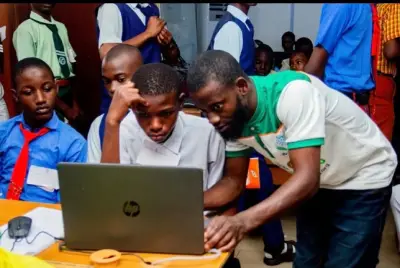
The future of work isn’t a distant milestone—it’s already here, and its currency is Artificial Intelligence. Yet, a deep digital divide threatens to leave thousands of brilliant minds in Nigeria’s public school system behind.
The Learntor Foundation. With the official launch of their fourth TechUp Boys cohort in Agege, Lagos, this digital transformation NGO is executing a masterclass in social engineering.
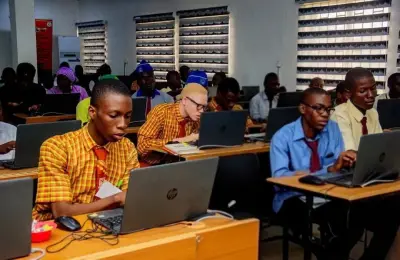
By equipping thousands of SS2 boys with free Microsoft AI licenses and digital branding skills, they are doing something incredible: transforming local teenagers from passive consumers of technology into legitimate, wealth-creating digital architects.
The Launch: Stepping Into Agege’s Classrooms
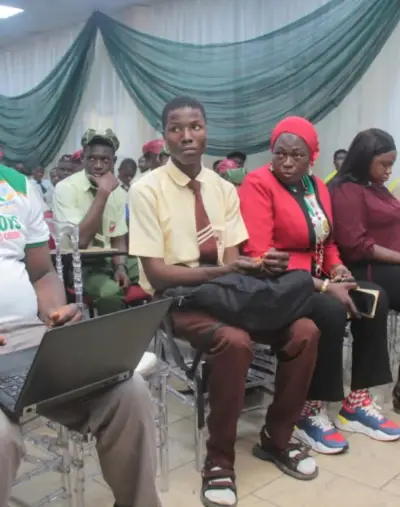
Recently, the air at Dairy Farm Senior Secondary School and Sanngo Senior Secondary School (both in Lagos State Education District I) was electric.
Representatives from the Learntor Foundation arrived not just to give a speech, but to ignite a movement.
The team engaged in highly interactive sessions with Senior Secondary Two (SS2) students, introducing them to a world beyond social media scrolling: the world of tech creation, branding, and artificial intelligence. Following the sessions, the foundation launched an online registration drive, paving the way for an intensive, life-changing two-week boot camp.
But this isn’t just a brief workshop. This is a massive, structural intervention.
While the program has already impacted an incredible 13,200 boys across its first three cohorts since launching in 2023, Cohort 4 is aiming even higher.

This phase targets all SS2 boys across the 39 public secondary schools in Education District I. We are talking about thousands of young minds being ushered into the digital economy at once.
The Vision: “Yes to Tech, No to Crime”
At the heart of this movement is Mrs. Mercy George-Igbafe, the visionary Founder of the Learntor Foundation. For her, teaching tech is a form of economic warfare against poverty and crime.
“Our goal is to help young boys develop tech skills in AI and understand the importance of maintaining a positive digital presence. We want them to say yes to tech, and no to crime. That is the vision behind the programme,” George-Igbafe emphasized during the inauguration.
ALSO : UNIUYO Unveils Top-up Degree and HND Conversion Programme for 2026/2027
In a world where young men from disadvantaged communities are often stereotyped or lured into illicit online activities, TechUp Boys offers an alternative narrative.
It offers a blueprint for cultivating a positive digital footprint. By equipping young men with the skills to build professional profiles on platforms like LinkedIn and X, the initiative transforms them into magnets for global career opportunities.

The Microsoft Boost
To ensure these boys are learning with world-class tools, global tech giant Microsoft has stepped up to support the initiative, providing 300 free licenses. This partnership ensures that participants aren’t just learning basic computer literacy; they are getting hands-on experience with cutting-edge AI skills relevant to the future of work.
The Ripple Effect: Community and School Support
The enthusiasm for TechUp Boys extends far beyond the foundation itself. Educators and government officials in Lagos are recognizing the program as a vital tool for social engineering and community development.
1. Stakeholder: Miss Titilayo Omotoso (Vice Principal, Dairy Farm Senior Secondary School)
- Perspective & Impact: Believes the program will redirect students from negative activities into productive ventures. She committed the school’s ICT facilities to fully support the initiative.
2. Stakeholder: Mrs. Adenaike Jokotade (Director of Co-Curricular Science & Tech, District I)
- Perspective & Impact: Highlights the program’s potential to significantly reduce youth involvement in crime, drug abuse, and cultism by channeling their energy into technology.
3, Stakeholder: Mrs. Gani Omolade & Mrs. Olayinka Ayeni (Vice Principals, Sanngo Senior Secondary School)
- Perspective & Impact: Frame tech skills as essential modern tools for innovation, entrepreneurship, and sustainable wealth creation.
The Boys Are Ready to Conquer
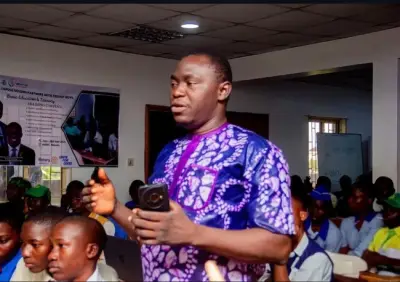
Ultimately, the true success of TechUp Boys lies in the eyes of the students themselves. The hunger for growth is palpable.
Udenwoke Richard, a student at Dairy Farm Senior Secondary School, perfectly captured the ambition of his cohort. He shared his hope to use the knowledge gained not just for personal gain, but to create legitimate wealth for his family and his community at large.
Over at Sanngo Senior Secondary School, his peers echoed this optimism, viewing AI skills as their golden ticket to an enhanced future and overall well-being.
What impact will this initiative have on society?
The TechUp Boys initiative hits a critical intersection in Nigerian society: it bridges the digital divide while directly addressing youth restiveness. By taking boys from communities like Agege and dropping them into an intensive tech ecosystem, the program creates ripples that extend far beyond the individual participants.
Here is a breakdown of the structural, economic, and social impact this initiative has on society:
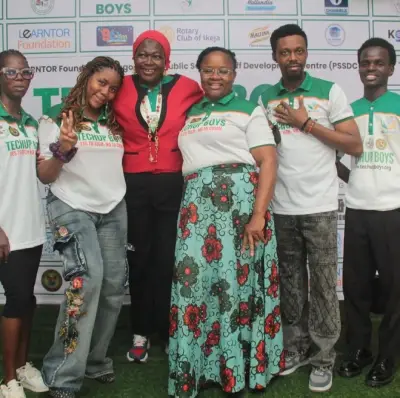
Rewriting the “Yahoo Yahoo” Narrative
In many underserved Nigerian communities, brilliant young minds with a knack for computing are often exposed to cybercrime (“Yahoo Yahoo”) as the only visible pathway out of poverty.
TechUp Boys provides an off-ramp from illicit activity by providing an explicit alternative. When a 15-year-old sees a peer like Damilare pull in thousands of followers and build a legitimate graphic design business, the definition of success shifts.
ALSO : Top 15 Essential Skills for Students in 2026: A Complete Guide
It channels raw, entrepreneurial energy away from crime, cultism, and drug abuse, and directs it toward sustainable, legal wealth creation.
Democratizing the Future of Work
Advanced skills like Artificial Intelligence (AI) and digital branding are typically gatekept, locked behind exorbitant tuition fees, premium bootcamps, and high-end private schools.
This creates a deep class divide in the tech ecosystem.

By distributing 300 free Microsoft licenses and targeting public secondary schools, Learntor Foundation is democratizing access. It ensures that public school students from Agege can compete for global remote roles alongside peers from affluent backgrounds, flattening the economic playing field.
Turning Consumers into Local Economic Engines
When you empower a youth in a Nigerian household with digital skills, you aren’t just helping one person; you are lifting an entire family unit.
Micro-Economies: Boys learning digital branding or UI/UX start earning in Naira (and sometimes foreign currency) via freelance platforms. This money is immediately pumped back into local communities for food, healthcare, and siblings’ school fees.
The Talent Pipeline: By scaling across 39 public schools in Lagos Education District I, the initiative creates a concentrated, highly skilled local talent pool. This attracts tech hubs, SMEs, and corporate organizations looking to hire affordable, tech-savvy local talent.
The Long-Term Social Blueprint
The Individual
- Before Initiative: High risk of joining local gangs or dropping out due to lack of financial prospects.
- After Initiative: Equipped with LinkedIn profiles, portfolios, and globally relevant AI skillsets.
The Family
- Before Initiative: Financial strain; relying entirely on low-income or informal sector parental earnings.
- After Initiative: Influx of legitimate, tech-driven secondary income from a teenage freelancer.
The State (Lagos)
- Before Initiative: Pressure on law enforcement and public infrastructure to curb youth restiveness.
- After Initiative: A growing population of tax-paying, digitally literate digital economy contributors.
Ultimately, the impact of TechUp Boys is preventative social engineering. Instead of spending resources on rehabilitating youths who have already fallen into crime or economic despair, the initiative intercepts them at the SS2 level, arming them with the tools to build a positive digital footprint and a future they can be proud of.
Does TechUp Boys Initiative have branches across Nigeria?
Currently, the Learntor Foundation and its TechUp Boys initiative do not have physical branches operating across the whole of Nigeria.
The physical, boots-on-the-ground execution of the program is highly concentrated in Lagos State, which serves as its primary hub.
Here is how their operations are structured geographically and digitally:
The Lagos Base (Physical Operations)
The foundation relies heavily on strategic partnerships with the Lagos State Government and the Lagos State Ministry of Education.
- The Training Hub: Their core physical boot camps are hosted at the Public Service Staff Development Centre (PSSDC) in Magodo, Lagos.
- School Districts: The physical rollout is currently moving systemically through Lagos State’s education districts, heavily focusing on District I (areas like Agege, Alimosho, and Ifako-Ijaiye).
The founder, Mercy George-Igbafe, has noted that because Lagos alone has tens of thousands of public-school boys waiting for training, their physical resources are deeply focused on scaling across the state first.
National Reach via Digital Pathways
While they lack physical brick-and-mortar offices in other states (like Abuja, Port Harcourt, or Kano), the initiative expands its national footprint through hybrid and online learning models.
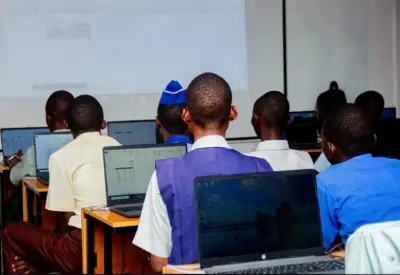
- During their cohorts, hundreds of boys join the training pipelines via online learning sessions.
- As an EdTech organization, Learntor’s broader digital transformation programs (which include data analytics and agile training) are accessible to youth across Nigeria virtually.
- The Scaling Goal: The foundation has expressed that their ultimate vision is to take this model across Nigeria to combat youth unemployment nationwide, but full expansion relies heavily on getting similar institutional backing from other state governments and corporate sponsors to fund the infrastructure outside of Lagos.
Why Initiatives Like TechUp Boys Matter
The future of work isn’t coming; it’s already here. AI, digital branding, and data literacy are the new global currencies. When we look at underserved communities, the digital divide threatens to leave brilliant young minds behind simply because they lack access.
By targeting young boys at the crucial SS2 stage, the Learntor Foundation is intervening at a pivotal crossroads in their lives. They are proving that with the right tools, a supportive ecosystem, and corporate backing from giants like Microsoft, the youth of Lagos don’t just have to be consumers of technology; they can be its architects.
As the two-week boot camp begins, we look forward to seeing the next generation of Damilares rise from Agege, ready to take on the digital world.
In conclusion, the success of the TechUp Boys initiative in Agege proves that talent is evenly distributed in Nigeria, but opportunity is not. Organizations like the Learntor Foundation are laying the bricks, but building a sustainable digital economy requires a village.
ALSO: Top 10 Coding Bootcamps for University Students Worldwide
Here are a few ways you can help bridge the digital divide in your own community:
- Mentor a Youth: If you have tech, design, or writing skills, dedicate just two hours a week to mentoring a public-school student in your neighborhood.
- Donate Used Tech: Don’t let your old laptops, tablets, or smartphones gather dust. Donate them to local NGOs or public-school ICT labs.
- Champion Legitimate Creators: Next time you need a graphic designer, social media manager, or video editor, intentionally look out for young freelancers from underserved communities.
- By steering our youths toward tech, we aren’t just saving lives—we are building the future of Africa’s digital economy.
What are your thoughts on the TechUp Boys initiative? How can more corporate organizations support grassroots digital literacy in Africa? And do you know of any local tech programs making waves in your area? Let us know your thoughts in the comments section below!
Recommended: How Students Are Making Money Through Tech in Nigeria
Top Tech Innovations From Nigerian Universities in 2026
Photo credit: techup boys/ Instagram
All the best
Enjoy every single day