
Groundbreaking Victory: Student Wins Lawsuit Against Turnitin Plagiarism Flags.
Imagine spending 20 gruelling hours writing a history essay. You pour your heart into the research. You seek help from university tutors. Finally, you submit the assignment with pride. Suddenly, an algorithm brands you a cheater. Your professor gives you a failing grade. The university refuses to listen.
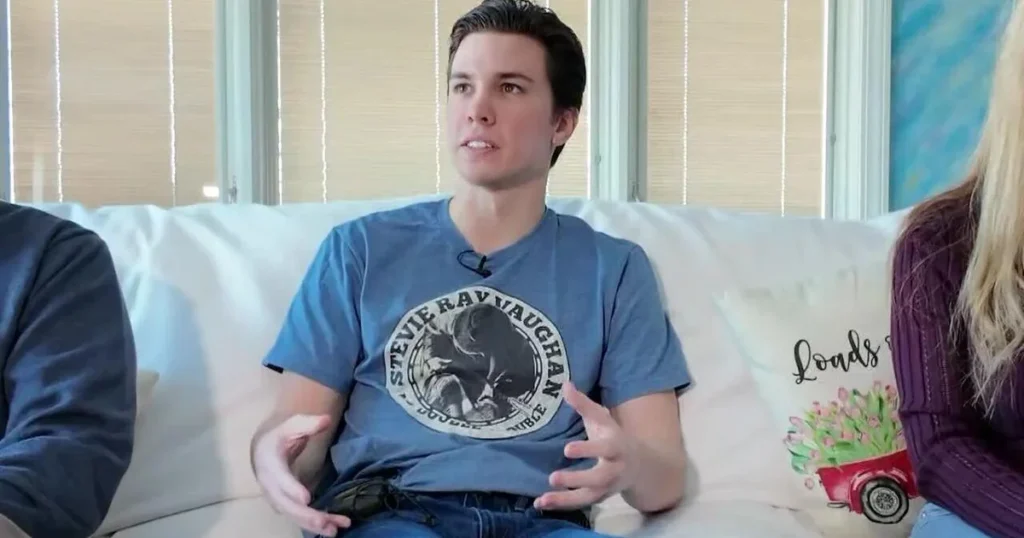
This nightmare became a reality for Orion Newby. He is an Adelphi University student. However, he did not just accept the false accusation. He fought back aggressively. Recently, this brave student won a lawsuit against Turnitin AI detection flaws.
This case has completely shaken the academic world. AI detectors are wreaking havoc on innocent students globally. Let us dive into the precise details of the incident. We will explore how he won. Afterward, we will outline the exact steps you can take to defend your academic integrity.
The Incident: Before the Student Wins Lawsuit Against Turnitin Flags
Orion Newby enrolled at Adelphi University in August 2024. He is a student with a documented learning difference. Specifically, he lives with Level 2 Autism Spectrum Disorder. Due to his diagnosis, he joined the university’s Bridges Program. This program provides comprehensive academic and social support for special needs students.

In November 2024, Newby received a history assignment. He took the task very seriously. He spent between 15 and 20 hours drafting the essay. Furthermore, he worked closely with tutors from the Bridges Program to refine his work. He wrote every single word himself.
He submitted the essay to his professor, Professor Oelze. Shortly after, the nightmare began. The professor ran the essay through Turnitin. The software returned a shocking result. It flagged the essay with a 100% AI-generated score.
Consequently, the professor summoned Newby for an in-person meeting. He asked if Newby used generative AI like Grammarly to write the paper. Newby categorically denied the accusation. Despite his denial, the professor filed a formal Academic Integrity Violation Report.
The Immediate Fallout
The consequences were immediate and harsh. Professor Oelze gave the essay a grade of zero. Adelphi University’s Academic Integrity Officer, Professor Michael Lacombe, officially found Newby responsible for the violation. The university sanctioned him to attend a mandatory plagiarism workshop. They even threatened to place a hold on his registration if he failed to comply.
Newby and his parents were devastated. They knew he did not cheat. To prove his innocence, his parents ran the exact same essay through other AI detectors. They used the Grammarly AI detector and ZeroGPT. Both independent tools returned a 0% chance of the essay being AI-written.
They presented this evidence to the university. However, the administration refused to budge. The school denied him a fair and impartial hearing. They also denied him the right to an advisor of his choice. The situation seemed completely hopeless.
The Legal Battle: How the Student Wins Lawsuit Against Turnitin Accusations
Faced with an uncompromising university, the Newby family took drastic action. They hired attorney Mark Lesko and filed a lawsuit against Adelphi University in the New York Supreme Court. The family spent heavily on legal fees to clear his name. They wanted the wrongful disciplinary finding annulled.
The lawsuit argued that the university acted arbitrarily and capriciously. The legal team highlighted that the school blindly trusted a flawed algorithm. They completely ignored the conflicting evidence from other detectors. Moreover, the school violated its own Student Bill of Rights by denying Newby a fair hearing.
The case dragged on for months. Finally, on January 28, 2026, the court delivered its verdict. The judge ruled entirely in Newby’s favor. The court declared the university’s disciplinary action invalid. They ordered the school to expunge the violation from his academic record.
This ruling is monumental. When a student wins lawsuit against Turnitin AI detection, it sets a massive precedent. It proves that universities cannot rely solely on opaque algorithms to punish students.
Why the Judge Ruled in His Favor
The court examined the documentary evidence closely. The judge found that Adelphi University failed to substantiate its claims. The “100% AI” finding lacked a valid, verifiable basis. The university could not prove how Turnitin arrived at that conclusion.
Furthermore, the school’s refusal to consider exculpatory evidence damaged their case. By ignoring the ZeroGPT and Grammarly results, the university acted unreasonably. The victory exposed the deep flaws in how schools handle academic integrity in the AI era.
Why AI Detectors Fail Miserably
To understand why this case matters, we must examine the technology itself. AI detectors do not actually detect AI. They cannot read a text and magically spot a robot’s signature.
Instead, they guess. They use statistical models to measure two things: “perplexity” and “burstiness.” Perplexity measures how predictable your word choices are. Burstiness measures the variation in your sentence length.
If you write with simple words and consistent sentence lengths, the detector assumes a machine wrote it. This methodology is fundamentally broken.
High False Positive Rates
Turnitin openly admits to a false positive rate. Let us put that into perspective. If a university has 30,000 students, thousands of innocent people get wrongly flagged every single term.
Washington State University recognized this massive problem. They saw over a thousand false positives in a single semester. Consequently, they dropped their contract with Turnitin entirely. They realized that destroying innocent students’ academic careers was an unacceptable risk.
The Non-Native Speaker Bias
The technology possesses a severe, inherent bias. A Stanford University study exposed a terrifying reality. AI detectors falsely flagged over 61% of essays written by non-native English speakers.
When students learn English as a second language, they learn strict grammar rules. They write in clean, precise, and predictable sentences. Unfortunately, this is exactly what AI detectors look for. They penalize good grammar. This systemic bias punishes international students disproportionately.
Disagreement Among Detectors
The Newby case perfectly illustrates another flaw. The exact same text will score differently on different platforms. Turnitin said 100% AI. ZeroGPT said 0%. If the technology actually worked, the results would be uniform.
Even OpenAI, the creator of ChatGPT, launched an AI classifier tool. However, they quietly shut it down months later. Why? Because it simply did not work. It falsely accused human writers far too often.
Defending Your Work After a Student Wins Lawsuit Against Turnitin Flaws
The Adelphi University case proves that you can fight back and win. However, lawsuits are incredibly expensive and emotionally draining. You should aim to stop the accusation before it escalates to a courtroom.
Here is a comprehensive, step-by-step guide to protecting yourself against false AI accusations.
Build Your Proof Before You Need It
This is the single most important step. You must build your defense while you are writing. It requires almost zero effort, but it saves academic careers.
Always write your essays in Google Docs or Microsoft Word online. Ensure you turn on the “version history” feature. Do not write your essay in a separate notepad and paste it into the document later.
Version history is your ultimate alibi. It records every single keystroke and logs every time you pause to think. It shows every paragraph you delete and rewrite. An AI copy-paste job happens instantly. A human writing process takes hours and looks messy in the version history.
A student at UC Davis recently faced a false accusation. They simply shared their Google Docs version history with the professor. The professor saw the hours of typing and immediately dropped the charges. Version history is undeniable proof of human effort.
Ask for the Evidence in Writing
If a professor accuses you, do not panic. Do not send an emotional, frantic email. Most importantly, never apologize for something you did not do. Some students panic and admit to using AI just to get a lesser punishment. Do not do this.
Instead, respond professionally and demand the evidence. Ask the professor for a written copy of the AI detection report. Ask them which specific tool they used and the exact percentage score.
Under the Family Educational Rights and Privacy Act (FERPA), you have the right to view your academic records. A disciplinary report falls under this category. They cannot punish you without showing you the evidence. Force them to put their accusations in writing.
Cite Their Own Policies Against Them
Most universities and software companies know these tools are flawed. You can use their own disclaimers to defend yourself.
Turnitin’s own official guidance states clearly that its report “does not make a determination of misconduct.” The company explicitly warns educators that the score should not be the sole basis for discipline.
Furthermore, look up your university’s specific academic integrity policy. Many forward-thinking schools state that suspicion of AI use is not sufficient evidence. Remind your administration of these policies. If the only evidence they have is a detector score, they do not have a valid case.
The Ultimate Offer That Ends the Conversation
Sometimes, professors refuse to listen to reason. They trust the machine more than they trust their students. If you reach a stalemate, you have one final, powerful move.
Offer to rewrite the assignment on the spot.
Tell the professor or the disciplinary board that you will sit in their office right now. Tell them you will rewrite a similar essay under their direct supervision, without any internet access.
People who cheat using AI will never take this offer. They lack the knowledge to write the paper manually. However, a student who did the research will gladly write it again.
Making this offer demonstrates supreme confidence. It proves you understand the subject matter deeply. In almost every case, the professor will decline your offer and drop the accusation. It is the ultimate bluff-caller.
The Future of AI in Education
The academic world must adapt to the reality of artificial intelligence. Banning it completely is impossible. Relying on flawed detectors is unethical.
Educators need to change how they assess students. They must move away from generic take-home essays. Instead, they should incorporate more in-class writing, oral presentations, and highly specific, localized research assignments that AI cannot easily fake.
Until the education system adapts, students remain at risk. You must be proactive. Document your writing process meticulously. Know your rights. Stand your ground.
Conclusion: Protect Your Academic Integrity Today
The fact that a student wins lawsuit against Turnitin flags is a massive victory for academic justice. Orion Newby refused to let a flawed algorithm destroy his future. He fought back against a stubborn administration and cleared his name.
However, his ordeal highlights a terrifying reality. The tools universities use to catch cheaters are punishing innocent students. You cannot trust the system to protect you automatically. You must protect yourself.
Take action today. Open Google Docs, ensure your version history is tracking, and save your drafts. If you ever face a false accusation, remember Newby’s story. Demand the evidence, cite the policies, and offer to prove your knowledge in person.
Over to you! Have you or someone you know ever been wrongly flagged by an AI detector? Share your experiences in the comments below. Let us build a community of students who know how to fight back! Subscribe to our blog for more updates on student rights and AI technology.
Related:
Real Scholarship Success Stories: How Four Platforms Are Changing Lives Globally
A Historic Victory: Team Nigeria Wins Gold at the 2026 Spelling Bee World Cup in China
How JAMB is Advocating for AI to Drive Inclusive Higher Education in Nigeria
OAU Wins 2026 University Dual STEM Competition