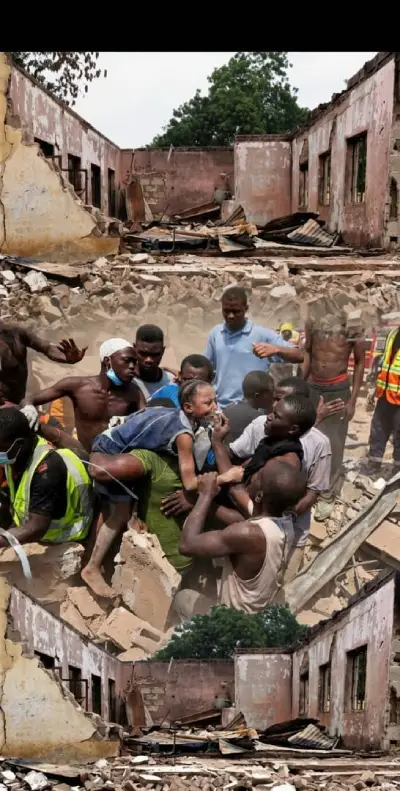
Every parent sends their child to school with a clear dream: to learn, grow, and build a bright future.
But behind many Nigerian school gates, a silent crisis is threatening that dream.
From severe bullying and extreme corporal punishment to sexual harassment,
School-related gender-based violence (SRGBV) is quietly undermining the safety and education of millions of students nationwide.

Recent data reveals a heartbreaking reality:
Nearly 18% of sexual violence incidents in Nigeria happen right on school grounds,
and a staggering 25% of children report experiencing physical trauma from teachers. Schools should be safe havens, yet for far too many children, they have become spaces of anxiety and fear.
Fortunately, the tide is turning.
Thanks to a powerful new initiative backed by the European Union and International IDEA,
Nigeria’s justice and education sectors are uniting to deploy a nationwide blueprint aimed at crushing school violence and prosecuting abusers.
Let’s dive into the shocking reality of Nigeria’s school safety crisis,
Uncover the “justice gap” that has let perpetrators walk free,
And look at actionable steps to take right now to protect our children’s futures.
What’s Happening Behind School Gates?
It is easy to dismiss behavioral issues as “kids being kids” or as matters of traditional discipline,
but recent data paints a jarring picture.
Melissa Omene, a Gender-Based Violence Policy Specialist with International IDEA, revealed startling figures during a recent high-level session in Abuja:
- 18% of all sexual violence incidents in Nigeria occur within school premises.
- 25% of children report experiencing physical trauma from corporal punishment administered by teachers.
- “Beyond statistics, these are lived experiences that disrupt safety, dignity, learning, and long-term well-being.” Melissa Omene, International IDEA
When a school environment becomes hostile, the fallout is immediate and long-lasting.
Children exposed to violence don’t just lose focus; they are far more likely to drop out entirely,
suffer from severe anxiety, and experience a sharp decline in academic performance.
We aren’t just failing to protect them; we are actively locking them out of their own futures.
Why Reporting Isn’t Enough
If a child builds up the immense courage to speak up about abuse, what happens next? Tragically, the answer is often: nothing.
This systemic failure was a central focus for advocates at the Abuja training workshop,
which targeted the creation of a Standard Operating Procedure (SOP) for prosecuting offenders.

The Current Challenge
- The Reporting Gap: Children speak to a teacher or caregiver,
- But the chain of custody and legal action breaks down immediately.
- The Deterrence Problem: When abusers and bullies face zero legal or administrative consequences, it emboldens them to continue.
The Ultimate Goal
- Survivor-Centered Justice: A clear, coordinated legal pathway that protects the child while ensuring swift investigation.
- Institutional Accountability: Zero-tolerance policies backed by federal prosecution to create a real deterrent.
Elizabeth Achimugu, Executive Director of the Protect the Child Foundation, put it bluntly:
“There has always been a gap.
A child may report abuse to a teacher or caregiver,
But the next step, accessing justice, is where the problem often lies.”
A Nationwide Blueprint for Safer Schools
change is finally bubbling up from the top.
Backed by the European Union’s four-year Support to End S3xual and Gender-Based Violence in Nigeria (ESGBV) programme,
key stakeholders from the Ministries of Justice, Education, and Women Affairs are aligning to fight back.
Here is how Nigeria is currently restructuring its defense system to protect students:
- Deploying the Legal Blueprint
The Federal Ministry of Education has officially distributed the new SOP prosecution guidelines to all 115 Federal Unity Colleges across Nigeria.
This ensures that every principal, vice-principal, and counselor knows exactly how to handle and legally escalate an abuse report.
- Training the Frontlines
An SOP document is only as good as the people enforcing it.
Intensive training courses are transforming education officers and law enforcement personnel into advocates,
who can discern grooming, manage sensitive disclosures, and ensure evidence is not compromised.
- Restoring Trust in Our Institutions
As Yewande Gbola-Awopetu, Head of the SGBV Response Unit at the Federal Ministry of Justice, noted,
school violence destroys a child’s confidence and weakens their trust in society. By establishing strict, transparent pathways to punish perpetrators, the government aims to rebuild that broken trust.
A Collective Responsibility
Policymakers are not the only ones who can put an end to school violence. It requires an unyielding alliance between parents, teachers, community leaders, and the justice system.
Schools must remain sacred spaces for curiosity, growth, and empowerment.
It’s time to close the gap between reporting abuse and achieving justice,
ensuring that the only thing our children bring home from school is an education they can be proud of.
What steps should we take to lessen the level of violence and fear associated with kids learning in Nigeria and everywhere else?
To lift the heavy burden of fear from students in Nigeria and across the globe,
we have to move past simply reacting to violence after it happens. True safety requires a proactive, multi-layered framework that bridges the gap between school policy, community culture, and legal accountability.
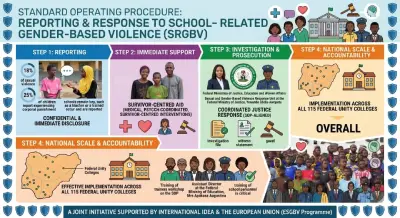
Here’s what we need to do in a systematic way to make sure kids can focus on learning instead of survival.;
Implement and Enforce Strict Legal Frameworks
If we want to protect children, we need to make sure they’re actually enforced.
We need to make sure that all state, local,
and private schools follow the SOPs that were recently distributed to Nigeria’s Federal Unity Colleges. There must be a clear, legally mandated pathway for escalating reports directly to law enforcement, cutting through internal school cover-ups.
Criminalize Severe Abuse:
Frameworks like Nigeria’s Violence Against Persons (Prohibition) Act (VAPP),
And the Child Rights Act must be fully institutionalized at the local government level globally, ensuring swift prosecution for abusers,
Whether they are peers, staff, or external predators.
Shift the Classroom Culture: Positive Discipline Over Pain
Fear of the teacher shouldn’t compete with fear of the curriculum.
- Ban Corporal Punishment Globally: Decades of data show that physical punishment degrades mental health and drives up dropout rates. Global education systems must completely phase out physical punishment.
Train Teachers in Positive Discipline: Educators need practical training in alternative classroom management.
Techniques like restorative justice (resolving conflicts through dialogue),
behavior contracts, and reinforcing positive behavior allow teachers to maintain authority without resorting to fear and physical trauma.
Establish Safe, Anonymous Reporting Channels
Many children suffer in silence because telling a teacher or administrator feels too risky.
- Independent Reporting Hubs: Schools need trusted,
- anonymous reporting tools such as toll-free hotlines, secure dropboxes,
- or simple mobile apps that bypass immediate school authorities who might try to protect the school’s reputation.
- Clear “Chain of Custody” for Complaints:
- When a child speaks up, there must be a zero-tolerance policy for retaliation,
- and the case must be handled by trained child protection counselors rather than general discipline staff.
Tackle Cyberbullying and Peer Violence
Violence has moved beyond the physical schoolyard and onto digital screens, following children home.
- Evidence-Based Anti-Bullying Programs:
- Schools worldwide need to implement peer-led intervention strategies (teaching bystanders how to safely intervene),
- and explicit digital literacy curricula that address online harassment, grooming, and cyberbullying.
- Mental Health Infrastructure:
- Routine access to school counselors and psychologists,
- To help identify both victims of trauma and aggressive children who require early psychological intervention,
- Before their behavior escalates into severe violence.
Address the Root Causes of Insecurity
In many fragile regions, the threat of violence comes from outside the school gates.
- Safe Schools Initiatives:
- In areas prone to conflict, kidnapping, or insurgencies (such as parts of Northern Nigeria), physical school security must be fortified. This includes building secure perimeter fencing, establishing community-based early warning networks, and creating rapid-response protocols with local security forces.
- Community-Led Protection:
- True security requires engaging parents, traditional rulers,
- and religious leaders to dismantle cultural norms that shield perpetrators of gender-based violence or normalize severe child abuse.
What is the current status of the Safe Schools Initiative in Nigeria, and how does it protect rural schools from external security threats?
The Safe Schools Initiative (SSI) in Nigeria finds itself in a challenging position,
defined by a stark contrast between massive financial commitments and ongoing security vulnerabilities on the ground.
While originally launched in 2014 following the Chibok school abductions,
The initiative was significantly scaled up into a comprehensive National Plan on Financing Safe Schools (2023–2026).
Current Status: The Fiscal Paradox
The initiative is operating under a massive ₦144.77 billion budget spanning from 2023 through 2026.
The funding is structured to scale up annually,
backed primarily by the Federal Government with expected matching contributions from state governments and international donors.
Year and Allocated Funding Target
- 2023: ₦32.58 Billion
- 2024: ₦36.98 Billion
- 2025: ₦37.15 Billion
- 2026 (Current): ₦38.03 Billion
The Implementation Gap
Despite these major budget allocations, the initiative is facing severe scrutiny from security experts and communities. Mass abductions have continued to hit schools—spreading from traditional hotspots in the North to parts of the South.
Data highlights that a massive chunk of the budget,
(over ₦82 billion) was earmarked for security agencies like the Nigeria Security and Civil Defence Corps (NSCDC),
The police and defense forces need arms, equipment, and training. However, bureaucratic bottlenecks mean funds are heavily centralized in Abuja. Only about 37% of schools in high-risk states currently have basic functional early-warning systems,
and just 14% meet standard safe-infrastructure requirements.
ALSO: 2026 WASSCE Extortion and Why WAEC is Sanctioning Schools Over Illegal Fees
How the Initiative Protects Rural Schools
Rural schools are historically the most vulnerable,
“soft targets” for bandits and insurgents due to remote locations and poor communication networks. To address this, the SSI relies on a multi-agency strategy coordinated by the NSCDC alongside local communities:
1. Community-Based Early Warning Systems (EWS)
Because security forces cannot be stationed at every rural school,
the initiative focuses heavily on training School-Based Management Committees (SBMCs), parents, and traditional rulers.
Local communities are trained to spot unusual movements,
identify grooming or scouting by armed groups, and immediately trigger alerts through designated communication channels before an attack occurs.
2. Local Vigilante Collaboration and Training
The NSCDC and Nigeria Police Force lead capacity-building workshops for registered local vigilantes,
and hunters who live in these rural peripheries.
Since these local groups know the geography intimately,
the initiative seeks to integrate them into the formal security architecture,
equipping them to provide the first line of defense and intelligence gathering.
3. “Minimum Standards” Infrastructure
On paper, the plan mandates physical security upgrades for rural campuses.
This includes building perimeter fencing, installing basic monitoring equipment,
creating solar-powered lighting systems to secure schools at night, and establishing strict access control gates.
4. Emergency Evacuation and Transfer Protocols
When imminent threats are detected, the protocol dictates immediate temporary closures and the evacuation of students.
In extreme cases where a rural area becomes permanently high-risk,
the framework includes a component to transfer students,
from affected communities into safer regional boarding schools or government learning centers in highly secured urban zones.
What should we do to make sure that our kids and teachers are safe in this country?
Guaranteeing the safety of children and teachers from insecurity,
especially in high-risk zones across Nigeria, requires moving past policy announcements and into concrete, heavily enforced physical and operational defenses. Because schools are considered “soft targets” by bandits and insurgents, our approach to protecting them must change permanently.
The Federal Government, state authorities, and local communities must implement the following non-negotiable measures:
- Decentralize and Automate Emergency Response
While high-level frameworks exist,
the time it takes for security forces to respond to a school emergency is often too slow.
Activate 24/7 School Command Centers:
The Nigeria Police Force has recently launched a round-the-clock Schools Protection Squad (SPS),
Command and Control Centre in Abuja to handle emergency distress calls.
To save lives, every state command must link directly to this system,
ensuring that when a rural principal or community leader triggers a distress call,
a rapid-response unit arrives within minutes, not hours.
Integrate Local Security Tech: Schools should be outfitted with silent,
Solar-powered panic buttons linked directly to the nearest military, police, and NSCDC outposts.
- Enforce “Minimum Security Standards” for Infrastructure
A school with porous boundaries is an open invitation to criminal elements. State governments must enforce strict physical requirements before a school is permitted to operate:
Perimeter Fencing and Controlled Gates: Every public and private school,
particularly those in rural communities bordering forests or open highways—must have high, secure perimeter fencing.
Illumination and Surveillance:
Solar-powered floodlights must line school perimeters to eliminate blind spots at night,
alongside basic CCTV or monitored access points to verify everyone entering or leaving the premises.
- Form Formal Security Alliances at the Grassroots
Relying solely on federally deployed soldiers isn’t practical for thousands of schools nationwide.
Deploy Specialized School Personnel: State governments need to deploy dedicated, armed security personnel to high-risk campuses.
For instance,
recent legislative steps (like those proposed by the Oyo State House of Assembly),
emphasize deploying regional security setups like the Amotekun Corps alongside trained,
registered local hunters and vigilantes who know the terrain intimately.
Establish Rapid Joint Task Forces: Build specialized quick-reaction units in every education zone,
creating a tight network between community hunters, local vigilantes, and federal forces.
- Run Active Safety Drills and Security Education
Security is not just the job of the guard at the gate;
teachers and students must be active participants in their own survival.
Mandatory Security Curricula: Integrate basic safety awareness, situational consciousness, and threat-identification training directly into school lesson plans.
Crisis Rehearsals: Just as schools practice fire drills globally, Nigerian schools must conduct routine emergency evacuation, lockdown, and active-shooter/bandit-intrusion drills.
Teachers must be explicitly trained on how to secure classroom doors,
keep children calm, and execute silent headcounts during a crisis.
- Introduce Flexible “Crisis Learning” Alternatives
When intelligence indicates that a specific local government area or community is under imminent threat,
conventional schooling must adapt instantly to keep children out of harm’s way.
Structured Remote and Home Education: As advocated by child rights groups,
the national education framework must formally incorporate regulated home learning and community-based digital hubs.
Rapid Evacuation Protocols: If an area becomes unsafe,
students and teachers should be immediately shifted to temporary,
highly secured regional boarding centers in urban grids rather than halting their education entirely.
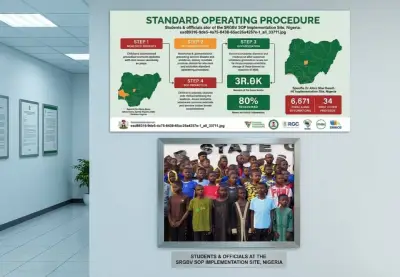
The children and teachers who suffer most from this violent attack in our school
You are pointing to the most painful truth of this entire crisis.
Behind every statistic, budget allocation, and policy document are real human beings specifically, the most vulnerable students and dedicated teachers who bear the brunt of these terrifying attacks.
When violence hits a school, it doesn’t affect everyone equally. Certain groups of children and teachers are pushed directly into the line of fire, and their lives are altered forever.
The Children Who Suffer the Most
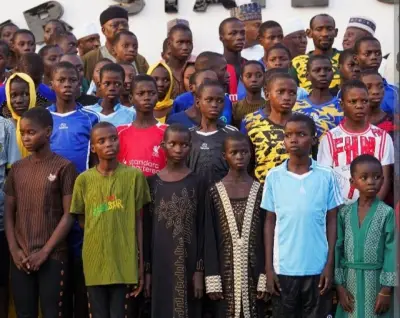
While every child in an affected school experiences trauma, specific students face unique, devastating consequences:
- Girls in Rural Communities
For young girls, school violence often carries a double edge.
In addition to the threat of mass abductions,
they face a high risk of School-Related Gender-Based Violence (SRGBV), including sexual assault, harassment,
and forced marriage by insurgent groups. When a school is attacked, many parents, out of sheer fear,
pull their daughters out of education permanently,
leading to a massive spike in child marriage rates and ending their academic futures.
- Children in “Soft Target” Rural Areas
Students attending remote, underfunded public schools or nomadic learning centers suffer disproportionately.
Unlike elite private schools in fortified urban centers,
these children study in classrooms with no fences, no electricity, and no security guards. They are the easiest targets for bandits looking for mass hostage leverage.
- The Psychological Scars: PTSD and Hypervigilance
Children who survive these attacks don’t just bounce back. Many develop severe Post-Traumatic Stress Disorder (PTSD), leading to:
- Hyper vigilance: Living in a constant state of fear,
- Where a sudden loud noise (like a slamming door or thunder) triggers a panic attack.
- Cognitive Drop: Chronic fear physically alters a child’s developing brain, making concentration, memory retention, and learning nearly impossible.
The Teachers on the Frontlines
Teachers are often forgotten in discussions about national security,
yet they are essentially functioning as frontline civil servants in active conflict zones.
The Sacrifice
- Acting as Human Shields
- Targeted for Kidnapping
- Mass Exodus & “Brain Drain
The Daily Reality
- During school raids, teachers frequently risk and lose their lives trying to lock classroom doors,
- hide their students, or reason with armed men to protect the children in their care.
- Bandits frequently target teachers alongside students because they are seen as authority figures,
- who can command ransom or be forced to help manage abducted children.
- No one can teach effectively under the threat of death.
- Thousands of qualified teachers have fled high-risk local government areas.
- This leaves rural schools completely abandoned or staffed by untrained volunteers,
- destroying the quality of education for the children left behind.
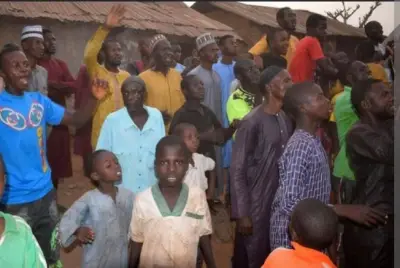
The Broken Bond of Trust
Perhaps the deepest wound suffered by both students and teachers is the destruction of trust.
A school is supposed to be a sacred space a place where a child looks at a teacher for guidance,
and a teacher looks at a child with hope for the future.
When violence breaches those walls, that sacred bond is shattered.
Teachers feel helpless because they cannot guarantee their students’ survival,
and children lose faith in the adults and institutions that are supposed to protect them.
This is exactly why securing our schools isn’t just about protecting physical buildings;
it is about protecting the very psychological and emotional foundation of our next generation.
In conclusion, securing the Future of Nigerian Education,
the crisis of school violence and insecurity in Nigeria is far more than a policy challenge;
it is a direct threat to our nation’s next generation.
From the hidden trauma of school-related gender-based violence (SRGBV) to the terrifying threat of rural school raids,
The burden of fear carrying over into our classrooms is a weight no child or teacher should ever have to bear.
While initiatives like the National Plan on Financing Safe Schools,
and new federal prosecution blueprints show that structural change is finally happening at the top,
policy alone cannot protect a classroom.
True, lasting safety requires closing the “justice gap” on the ground.
We must fortify our school infrastructure, actively train teachers in positive discipline alternatives,
and build airtight security alliances directly within our local communities.
Our schools must be restored as sacred sanctuaries of learning, growth, and ambition.
By moving from reactive budgeting to proactive, grassroots protection,
we can finally lift the shadow of fear from our education system,
ensuring that every Nigerian child can step through a school gate with confidence,
peace of mind, and a clear path toward a bright future.
What are your thoughts on this?
Do you think deploying standardized prosecution guidelines across Federal Unity Colleges will be enough to deter abusers,
or do we need deeper cultural shifts within our school systems?
What do you think is the most urgent step we need to take right now to protect our local schools? Leave a comment below and share this article to help amplify this vital conversation!
ALSO: Why Nigeria Postponed The WAEC CBT Exams 2026 Full Digital Rollout
Related posts:

The 33 Years Reunion Of Military Students

Nigerian Navy Basic Training School Batch 39 Recruitment Exercise 2026: The Complete Guide

FG Suspends Proposed Review of WAEC and NECO Registration Fees

Smart school vandalism: and I ask why ?

Nigerian Education Quality And Standards