
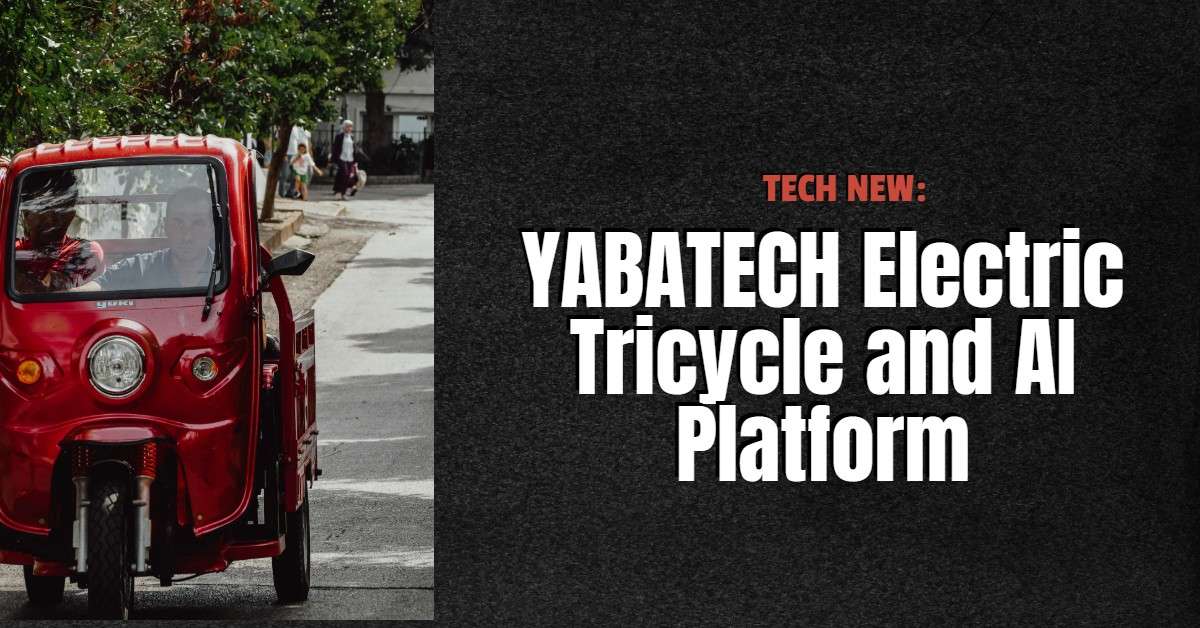
Have you noticed how expensive getting around Lagos has become lately? We all feel the pinch. The cost of transportation keeps climbing. Food delivery services charge almost as much as the meal itself. But sometimes, the best solutions come from the minds of young, hungry innovators. Just recently, we saw a massive breakthrough in this space. During a massive campus exhibition, we saw the highly anticipated YABATECH electric tricycle and AI delivery platform projects debut, and they completely blew the judges away.
This wasn’t just another school science fair. It was a serious, real-world attempt to solve some of Nigeria’s biggest headaches. We are talking about reducing fuel dependency. We are talking about beating crazy traffic using artificial intelligence. And honestly? It is so refreshing to see young Nigerians building practical, market-ready technology instead of just writing theoretical papers. So, let’s dive into exactly how these brilliant minds built this tech and what it means for the future of our urban mobility.
The Harsh Reality of Lagos Transportation
Let’s set the scene first. Getting from one point to another in major Nigerian cities is a daily extreme sport. When fuel prices jumped recently, transport fares tripled overnight. Commercial tricycle operators—the popular “Keke” drivers—struggled to stay afloat. They had to pass those crazy fuel costs down to everyday commuters.
It became a vicious cycle. You pay more to commute, you pay more for goods, and your overall cost of living shoots up. Even local businesses felt the heat. If you run a small restaurant, delivering food to a customer miles away suddenly becomes a logistical nightmare. Riders complain about fuel. Customers complain about cold food. It’s a complete mess.
This is exactly the problem these students decided to tackle. They didn’t just complain on social media. They went into their workshops and started building. When the YABATECH electric tricycle and AI delivery platform debuted at the 2026 Global International Day of Innovation and Creativity, the timing was absolutely perfect. They showed up with a tangible answer to a national crisis. The theme of the event was “Step Out and Innovate,” and these students did exactly that.
Meet the Brains Behind the Electric Keke
So, who actually built this impressive electric vehicle? The brains behind the operation belong to a dedicated team of Higher National Diploma (HND) students. They hail from the Mechanical Engineering Department at Yaba College of Technology. A brilliant student named Chukwuma Chisom led this particular team.
Chisom and his crew looked at the standard, noisy, petrol-guzzling tricycles on our roads. They saw a machine that needed a serious 21st-century upgrade. They didn’t build a brand-new vehicle from scratch, which would have been too expensive and impractical. Instead, they took a conventional petrol-powered TVS tricycle and completely transformed it.
They ripped out the old internal combustion engine. They tossed out the fuel tank and the exhaust pipes. In their place, they installed a sleek, quiet, and highly efficient electric powertrain. This wasn’t just a basic school project. It involved serious engineering integration. They had to design custom motor-mounting brackets and reinforced battery compartments to make everything fit perfectly into the existing chassis.
The Technical Magic Under the Hood
Let’s get a bit technical, but I’ll keep it simple. How does this thing actually move without petrol? The students replaced the noisy engine with a 72-volt, 4-kilowatt Brushless Direct Current (BLDC) motor. This specific type of motor is fantastic because it requires very little maintenance. There are no spark plugs to change. There is no engine oil to leak.

They also integrated a compatible smart controller. This controller essentially acts as the brain of the tricycle. It manages the speed and torque perfectly. When the driver accelerates, the smart controller ensures a smooth, jerk-free ride. The students specifically designed the electric drivetrain to merge smoothly with the existing mechanical transmission. This ensures it can handle the heavy passenger loads expected on busy Lagos streets without breaking down.
You might be wondering about the battery power. Currently, this prototype version of the YABATECH electric tricycle and AI delivery platform initiative runs on a robust 72V 27Ah lithium battery. During their rigorous campus testing, this battery comfortably delivered about 45 kilometers on a single charge. For a prototype built in a student workshop, that range is incredibly impressive.
A Smart Design for Real-World Problems
The innovation doesn’t stop at just swapping the engine. The students thought deeply about safety and usability. Electric vehicles need reliable charging systems, especially in a country with a fluctuating power supply. So, the team built a smart charging system right into the tricycle.
This system is pretty genius. It features an automatic cutoff functionality. That means once the battery hits 100%, it automatically stops drawing power. This simple trick prevents the battery from overcharging and catching fire. They also added an overheating protection module to keep the power pack safe under the hot Nigerian sun.
Even better, it features plug-and-charge capability. The driver doesn’t need a special, ultra-expensive charging station. They can plug the tricycle directly into a standard alternating current (AC) power supply. Imagine a Keke driver simply plugging his vehicle into a standard wall socket at home while he sleeps. It completely eliminates the need to queue for hours at a petrol station ever again.
The Commercial Vision: Going the Distance
A 45-kilometer range is great for testing around the campus. But let’s be real, a commercial Keke driver covers way more ground in a single day. The student team already thought several steps ahead. They didn’t just build a prototype; they mapped out a full commercial blueprint.
Chisom and his team revealed their plans for the mass-market version of the tricycle. The proposed commercial model will upgrade to a massive 72V 150Ah lithium battery. With this massive upgrade, the tricycle will easily cover approximately 200 kilometers on a single charge. That is more than enough range for a full day of intra-city commercial transport.
This extended-range model drastically changes the game for transport operators. It offers zero fuel consumption, zero tailpipe emissions, and a shockingly low cost per kilometer. If investors back this project, it could rapidly accelerate Nigeria’s transition to eco-friendly mobility. It perfectly positions the YABATECH electric tricycle and AI delivery platform as a sustainable, homegrown alternative for our transport sector.
Enter the AI Food Delivery Ecosystem
While mechanical engineering students tackled hardware, another genius tackled the software side. Uba Mathew, a brilliant student innovator, noticed a massive gap in how we handle food logistics. Delivering meals in a chaotic city like Lagos is incredibly stressful. Food gets cold. Riders get lost in traffic. Customers get angry.
Mathew decided to fix this by building an Artificial Intelligence-powered food delivery ecosystem. He wanted to move past the traditional, clunky delivery apps we currently use. His concept transforms basic delivery into an intelligent digital network. It relies heavily on predictive analytics, automation, and data-driven decision-making.
Think about it. Most delivery apps just connect buyers to sellers. But this new AI system does the heavy lifting for everyone involved. It doesn’t just take orders; it actively learns and improves the entire logistics chain. The synergy between a clean-energy vehicle and smart routing software is what made the YABATECH electric tricycle and AI delivery platform make such a huge splash at the exhibition.
How the Artificial Intelligence Actually Works
Let’s break down Mathew’s software. How does AI actually make ordering food better? First off, it introduces intense personalization. The platform actively monitors what users usually buy, when they buy it, and how much they typically spend. Based on these behavioral patterns, the AI recommends specific meals and personalized promotional deals.
It feels like having a digital food concierge that knows exactly what you crave before you even type it out. But the magic really happens behind the scenes for the sellers. The platform gives food vendors access to actionable business analytics. Small restaurant owners can see which dishes are trending locally and adjust their daily cooking accordingly.
Furthermore, it integrates an advanced product review system. This isn’t just a basic five-star rating tool. The AI analyzes customer feedback to help buyers make informed decisions and forces vendors to maintain high hygiene and taste standards. It brings much-needed transparency to the fast-moving local food industry.
Fixing the Delivery Rider Headache
We all have a horror story about a delivery rider. They take the wrong route, blame the heavy traffic, and arrive an hour late. Mathew’s platform tackles this specific headache using smart logistics routing. The system constantly analyzes live traffic data to predict delivery demands and map out the fastest possible routes.
It doesn’t just guess; it calculates exactly how to beat the gridlock. The AI can efficiently assign tasks to the closest available rider, drastically reducing the turnaround time for short-distance logistics operations. If you pair this smart software with the newly developed electric tricycles, you get a logistics network that is incredibly fast, cheap, and totally clean.
The project also includes a balanced rider performance evaluation system. It carefully tracks rider behavior, delivery speed, and customer interaction. This ensures fairness and strict accountability across the entire delivery chain. Good riders get rewarded for their hustle, and poor performers get flagged. It’s a massive win-win for both business owners and hungry customers.
Winning the Ultimate Innovation Prize
When you build something this good, people definitely notice. The 2026 Global International Day of Innovation and Creativity was packed with brilliant projects from various departments. But the electric tricycle clearly stole the spotlight. The evaluators were completely blown away by the engineering students’ technical ingenuity and seamless teamwork.
Because of its massive relevance to Nigeria’s current transport and energy needs, the tricycle conversion project emerged as the overall best innovation of the day. The hard work literally paid off. The team walked away with a brand-new Migo laptop valued at about ₦890,000. They also received a sweet cash prize of ₦150,000 to share among the team members.
Corporate sponsors like Migo Phones Limited and Pay Vogue Pay ICT firm generously funded these prizes. This kind of corporate backing is exactly what our educational sector desperately needs. When companies reward student innovation, they inspire the next generation to dream even bigger.
The Rector’s Big Push for Tech Education
None of this happened in a vacuum. The leadership at Yaba College of Technology has been deliberately pushing for this exact kind of result for a while now. During the showcase, the Rector of the College, Dr. Engr. Ibraheem Abdul, delivered a highly inspiring speech to the crowd. He didn’t just hand out awards; he challenged the students to keep pushing boundaries.
Dr. Abdul passionately urged the youths to fully embrace creativity and technology. He stressed that raw, homegrown innovation is the only true pathway to sustainable economic growth in Nigeria. We simply cannot keep relying solely on oil revenues or imported technology. We have to build our own solutions to our own unique, local problems.
He emphasized the critical importance of practical skills development. The Rector challenged all the students to actively align their project ideas with national priorities and global technological trends. Building a nice app is great, but building an AI logistics network that solves urban traffic? That is thinking globally.
Why This Matters for Nigeria’s Future
This event was a massive victory for applied learning. For decades, Nigerian tertiary institutions faced heavy criticism for producing graduates who only understood textbook theory. Employers constantly complained that recent graduates lacked practical, hands-on skills. But projects like these completely destroy that old, tired narrative.
The Deputy Registrar, Mr. Adekunle Adams, echoed this exact sentiment in his official statement following the event. He noted that the institution strongly supports innovation-driven education. They actively encourage their students to step out of the classroom and build solutions with tangible, real-world impact.
When students learn to effectively merge artificial intelligence, renewable energy, and mobility systems, they become instantly employable. Even better, they become bold job creators. If the developers of the YABATECH electric tricycle and AI delivery platform secure proper venture capital funding, they could launch a startup that employs hundreds of riders and software engineers across Lagos.
The Next Steps for Student Innovators
So, what actually happens next? Building a prototype is just the beginning of the journey. The real challenge is scaling these amazing inventions for the mass market. The student developers now need serious, dedicated incubation. They need seasoned business mentors to help them patent their designs, refine their software code, and successfully pitch to serious angel investors.
The government and the private sector must step in right now. The Ministry of Science and Technology, alongside transport regulators, should provide massive grants to help finalize that 200-kilometer commercial battery. Telecom companies and logistics giants should aggressively court Uba Mathew to integrate his AI platform into their existing nationwide networks.
We cannot afford to let these brilliant ideas gather dust on a shelf in a dark school laboratory. We have a nasty habit in this country of celebrating innovations for a week and then totally forgetting about them. This time, we absolutely need to follow through. We need to fund these kids.
Conclusion
It is incredibly easy to get bogged down by the negative news we see every day. But looking at the sheer brilliance emerging from our local campuses gives us a massive reason to hope. The successful debut of these practical projects is a huge breath of fresh air. It shows that our youth are not just sitting around waiting for the future; they are actively building it with their own hands.
From swapping out noisy, fuel-hungry combustion engines to writing complex code that outsmarts Lagos traffic, these students are redefining what is possible in Nigeria. They proved beyond a doubt that with a little guidance and a lot of grit, local problems can definitely be solved with local technology. Let’s keep supporting our homegrown talents. They are the true, unstoppable drivers of our new digital economy.
Did you find this deep dive into campus innovation inspiring? Please share this article on your social media, send it to your class groups, and drop your thoughts in the comments below! Also, don’t forget to subscribe and read more of our tech updates to stay totally informed on Nigeria’s digital future.
Related:
Top Tech Innovations From Nigerian Universities in 2026
How Students Are Making Money Through Tech in Nigeria
Student Builds App That Solves UNILAG Hostel Crisis
Top 10 Coding Bootcamps for University Students Worldwide
10 Free AI Education Platforms from Tech Giants Worth Thousands in Value
I appreciate the honesty and openness in your writing.
This made me rethink some of my assumptions. Really valuable post.
I wasn’t sure what to expect at first, but this turned out to be surprisingly useful. Thanks for taking the time to put this together.
This made me rethink some of my assumptions. Really valuable post.