
NECO Rejects Miracle Center Label on Kogi School: The National Examinations Council (NECO) has firmly rejected claims against a school in Kogi State. Officials denied that Government Secondary School, Olowa, in Dekina Local Government Area, operates as an unauthorised “miracle center.”
A severe security breach recently occurred at the school. Gunmen abducted five individuals during the ongoing 2026 Senior School Certificate Examination (SSCE). Consequently, state officials publicly questioned the legitimacy of the examination venue.
In response, NECO released comprehensive institutional records to counter these allegations. The council defended its assessment standards vigorously. Furthermore, it reaffirmed the status of the school as a legitimate, state-owned educational institution.
The Abduction Incident and the “Miracle Centre” Allegation
The controversy began on Tuesday, 14 July 2026, during the 2026 NECO SSCE. Armed assailants invaded Government Secondary School, Olowa. The attackers abducted five people. The victims included the school principal, an external examination supervisor, and sitting candidates.
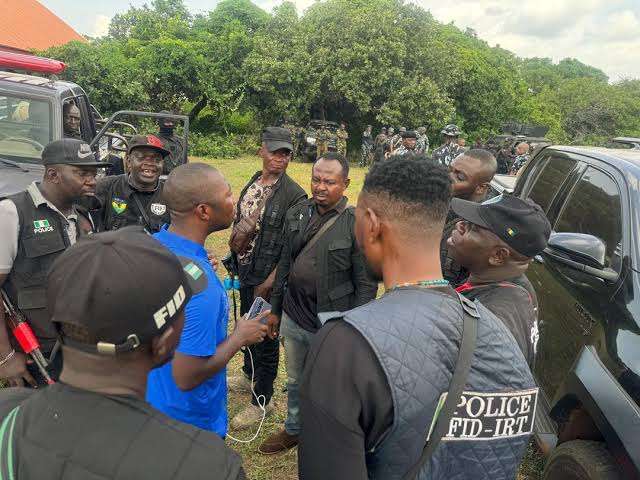
Joint security operations exerted sustained tactical pressure on the criminals. This pressure forced the kidnappers to abandon their captives. Consequently, security forces successfully rescued all the victims.
Kogi State Commissioner for Information and Communications, Kingsley Fanwo, spoke out following the rescue. He aligned with initial police reports regarding the venue. They alleged that the attack occurred at an abandoned or unauthorized facility. They claimed it operated illegally as a “miracle center.” This local term describes institutions that actively facilitate academic fraud and examination malpractice.
NECO Rejects Miracle Center Label on Kogi School (NECO’s Evidence-Based Rebuttal)
NECO issued an official statement on Friday, July 17, 2026. The Acting Director of Information and Public Relations, Azeez Sani, signed the document. He described the commissioner’s claims as completely false and misleading.
To set the record straight, the examination body provided verifiable data proving the school’s legitimacy:
- Forty-Year Institutional History: Government Secondary School, Olowa, is not an illegal or abandoned facility. It is a fully recognized public institution. The Kogi State Government has owned and operated it for over 40 years.
- Decades of Recognition: The school has consistently presented candidates for the NECO Senior School Certificate Examination since 2000.
- Substantive Civil Service Staff: The abducted principal, Elder Daniel Iyamaa, is a substantive Grade Level 17 officer in the Kogi State Civil Service.
- Official Supervisor Deployment: The kidnapped examination supervisor, Mr. Solomon Audu, is a Grade Level 12 officer. The state government employs him directly. Authorities officially deployed him from Community Secondary School, Effin.
- Authentic Student Status: The school registered 28 candidates for the 2026 NECO SSCE. All of them are bona fide, full-time students of the institution. This fact completely contradicts claims regarding an influx of external malpractice candidates.
- State Government Sponsorship: The 2026 West African Senior School Certificate Examination (WASSCE) concluded recently. During that exam, the Kogi State Government officially sponsored candidates from this exact school. In fact, the state paid the examination fees for 51 students there.
Historical Enrollment Consistency
Some critics claimed the school operates as a seasonal haven for examination tourism. To dismantle this claim, NECO published the institution’s recent registration figures. They released the SSCE enrollment numbers over the past five years.
Rather than showing suspicious spikes typical of malpractice centers, the records demonstrate steady and consistent local participation:
- 2021 Session: 21 registered candidates.
- 2022 Session: 20 registered candidates.
- 2023 Session: 28 registered candidates.
- 2024 Session: 40 registered candidates.
- 2025 Session: 20 registered candidates.
Proactive Security Measures and Anti-Malpractice Reforms
Beyond defending the specific school in Dekina, NECO highlighted its proactive operational planning across Kogi State. NECO took action prior to the commencement of the 2026 SSCE. The Kogi State Coordinator formally dispatched letters to local security agencies. These letters requested enhanced protection for all examination centers.
An earlier security incident directly motivated this precautionary request. Terrorists had attacked Government Secondary School, Iluke, in Ijumu Local Government Area during the 2026 WASSCE.
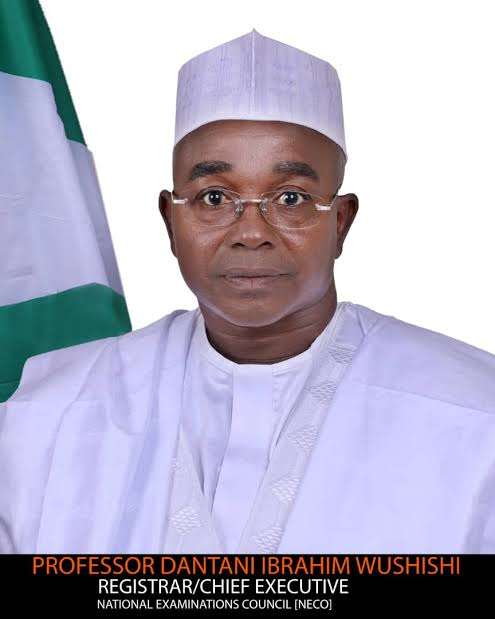
The council also reaffirmed its zero-tolerance policy regarding academic fraud. Prof. Dantani Ibrahim Wushishi currently serves as the Registrar and Chief Executive. Under his leadership, NECO has instituted sweeping administrative and technological reforms. These internal control measures have significantly driven down nationwide incidents of examination malpractice over the past five years.
The swift clarification from NECO underscores the critical need for inter-agency communication during administrative and security challenges. The safe rescue of the students and educational officials remains a shared victory. Both state authorities and security agencies deserve praise for this outcome.
However, unsubstantiated public labeling carries severe risks. It can inflict lasting damage on the reputation of public schools and their students. NECO transparently published its historical data and civil service deployment records. By doing so, the council cleared Government Secondary School, Olowa, of all malpractice allegations. Furthermore, this transparency has reinforced public trust in the integrity of national examination systems.
Recommended:
FG Suspends Proposed Review of WAEC and NECO Registration Fees
How JAMB is Advocating for AI to Drive Inclusive Higher Education in Nigeria
UNILORIN Post-UTME/DE Screening 2026/2027 (Guide)