
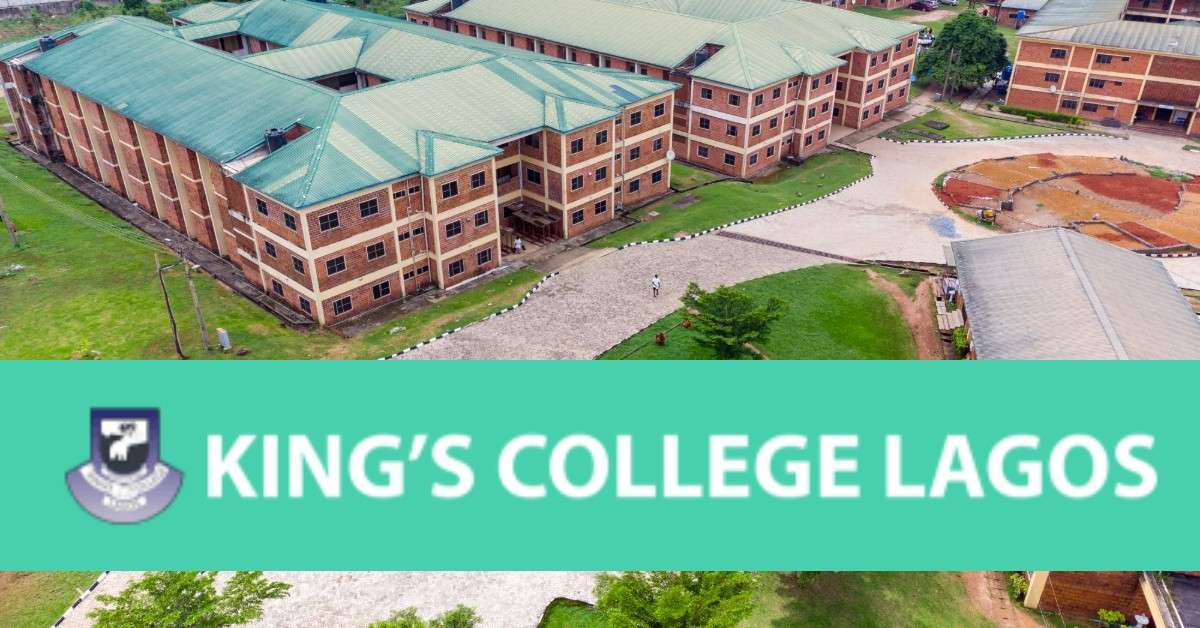
The Nigerian public education sector is currently facing a massive, unprecedented crisis. A fierce battle over control, capital, and legacy has erupted at the gates of King’s College, Lagos. This 117-year-old historic institution now stands at the very center of a bitter national controversy. What started as a local administrative disagreement has rapidly escalated into a full-blown industrial war. Consequently, the dispute now paralyzes academic activities across the country. Read on to understand the ongoing King’s College dispute in Lagos and discover why the KCOBA 35-year concession sparked a nationwide strike across 115 Federal Unity Colleges.
The crisis revolves around a controversial public-private partnership. The Federal Government recently granted a 35-year management concession to the King’s College Old Boys’ Association (KCOBA). The government intended this move to rescue the rapidly decaying infrastructure of the school. However, the decision instantly triggered massive resistance. Teachers, parents, and powerful labor unions vehemently rejected the arrangement.
They view this concession as a dangerous backdoor attempt to privatize public education. Currently, the crisis has spilled far beyond the borders of Lagos State. Workers across all 115 Federal Unity Colleges nationwide have initiated an indefinite strike in pure solidarity. In this highly detailed blog post, we will dissect every single aspect of the King’s College dispute. We will explore the government’s stance, the fears of the workers, the recent violent clashes, and the current state of the nationwide strike.
King’s College Dispute – The Root of the Crisis (The 35-Year Concession Agreement)
To understand the current hostility, we must first examine the core agreement. Shortly before the commencement of the 2026/2027 academic session, the Federal Ministry of Education made a stunning announcement. The ministry officially transferred the day-to-day management of King’s College to the KCOBA.
The government structured this handover as a 35-year concession. Under this strict arrangement, the Old Boys’ Association takes on heavy responsibilities. They must finance, rehabilitate, modernize, operate, and maintain the entire college. In return, they gain substantial influence over the daily administration of the school.
The KCOBA did not enter this agreement empty-handed. The wealthy alumni network reportedly mobilized a staggering N30 billion to revamp their beloved alma mater. They argued forcefully that the college had become badly run down. The infrastructure desperately required urgent, massive financial intervention that the government could no longer afford.
However, this massive influx of private capital immediately raised red flags. Opponents argue that whoever controls the finances ultimately controls the institution. This fundamental fear ignited the fierce protests that currently rock the educational sector.
The Government’s Defense: Not a Sale, Just a Partnership
The Federal Government completely denies all allegations of selling off the historic school. Education Minister, Dr. Maruf Tunji Alausa, strongly defended the concession arrangement during a recent press conference in Abuja.
He maintained firmly that King’s College has not been sold or privatized. The government retains the absolute legal title and statutory oversight of the property. Dr. Alausa explained that the arrangement purely seeks to mobilize massive private investment and management capacity. He noted that the government simply wants to fix the severe infrastructure deficits facing the school.
Furthermore, the government established strict Key Performance Indicators (KPIs) within the agreement. The Ministry of Education formed a dedicated implementation and monitoring team. This team possesses the absolute power to conduct unannounced inspections. They will strictly ensure that the KCOBA complies with all agreed academic and operational standards.
Dr. Alausa also quickly addressed a growing national fear. Many Nigerians worried that the government would extend this controversial model to other schools. The minister explicitly clarified that the King’s College arrangement remains an isolated case. The government will absolutely not extend this concession model to any other Federal Unity College in the country.
The Old Boys’ Vision for King’s College
The King’s College Old Boys’ Association strongly defends its motives. Kashim Ibrahim-Imam, the president of KCOBA, addressed journalists recently to clarify their specific objectives. He boldly declared that the old boys hold absolutely no interest in buying the school. Their sole objective is the complete development and restoration of the college.
Ibrahim-Imam highlighted the severe systemic failures currently plaguing the institution. He revealed a shocking statistic. At one point, King’s College accommodated more than 3,800 students. Meanwhile, the school possesses an estimated carrying capacity of only about 1,200 students. This massive overcrowding severely degrades the quality of education and stretches facilities to the breaking point.
Furthermore, the KCOBA president directly addressed the fears of the teaching staff. The old boys do not plan to retrench existing teachers. Instead, they intend to drastically improve staff remuneration and professional training. Ibrahim-Imam committed publicly to doubling the salaries and allowances of King’s College teachers as a first operational step.
The proposed rehabilitation master plan covers every single corner of the school. The KCOBA plans to completely rebuild classrooms, hostels, laboratories, and libraries. They will also upgrade dining halls, health facilities, staff quarters, and sports infrastructure to global standards.
King’s College Dispute: Why the Workers and Teachers Are Protesting
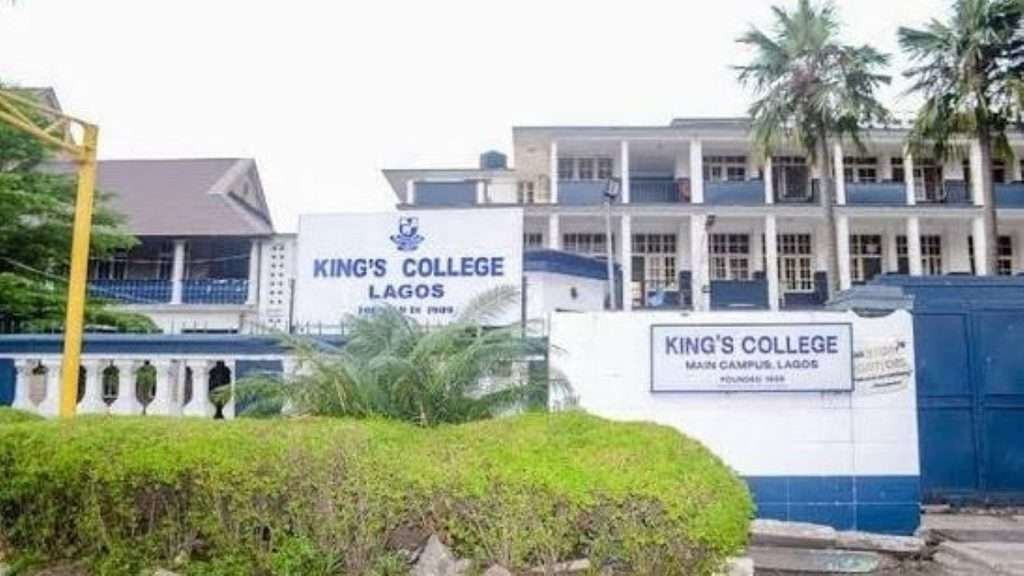
Despite the alluring promises of doubled salaries and new buildings, the workers remain entirely unconvinced. The Nigeria Union of Teachers (NUT) heavily faulted the Federal Government over the concession.
The National President of the NUT, Audu Amba, criticized the government for shirking its basic constitutional responsibilities. He argued passionately that the government must provide quality and accessible education for all Nigerian children. Amba described King’s College as a powerful national symbol of unity. Therefore, he insisted that it deserves direct government funding and absolute protection.
The workers’ fears center primarily on job security and staff welfare. A management transfer creates massive uncertainty. The workers fear arbitrary redeployments, loss of pension entitlements, and eventual victimization. They argue that general verbal assurances from the KCOBA hold no legal weight. The workers demand to examine the exact legal terms governing their employment under the new private management.
Furthermore, the NUT president highlighted a severe procedural flaw. The government completely excluded the teachers and their unions from the consultation process. The authorities negotiated the entire 35-year concession without seeking input from the people who actually run the school daily. This glaring lack of transparency instantly bred deep suspicion and hostility.
The Parents’ Perspective: Fears of Exclusion
The school’s Parent-Teacher Association (PTA) also strongly opposes the concession model. Parents worry deeply about the future affordability of the school.
Federal Unity Colleges historically provide highly subsidized, quality education for brilliant students from diverse economic backgrounds. The parents fear that a privately managed King’s College will inevitably introduce exorbitant school fees. They believe the KCOBA will prioritize elite families to recoup their massive N30 billion investment. Consequently, this move would completely shut out children from less privileged backgrounds.
Additionally, educationists like Helen Idiong have called for immediate transparency. She noted that the absolute lack of public access to the full concession agreement fuels these widespread fears. Idiong urged the government to publish the document immediately. She also suggested creating a joint oversight board comprising parents, teachers, and old boys to ensure equitable access.
King’s College Dispute: The Clash at the Gates and Police Intervention
The rising tensions finally boiled over into physical confrontation in September 2026. The Federal Ministry of Education officially directed the immediate handover of the college to the KCOBA. In swift retaliation, the staff unions completely shut down the school gates.
Protesting workers actively prevented members of the Old Boys’ Association from entering the premises. They formed a human barricade, determined to stop the transition process. This aggressive blockade led to a severe physical confrontation.
Consequently, the government rapidly deployed a heavy police presence to the school. Security personnel forcibly attempted to open the gates to allow the KCOBA members inside. Reports indicate that the police clashed violently with the protesting staff. Union leaders allege that police officers beat up staff members during the chaotic struggle. This forceful police intervention enraged the labor unions further and escalated the local dispute into a national crisis.
The 5-Point Agreement: A Temporary Truce
Following the violent clashes, the government scrambled to restore peace. On September 16, 2026, the Minister of Education, Dr. Tunji Alausa, and the Minister of State for Education, Suwaiba Ahmad, convened an emergency meeting in Abuja. They met with representatives of the Joint Workers Union and the Association of Senior Civil Servants of Nigeria (ASCSN).
After intense negotiations, the parties successfully hammered out a five-point peace agreement:
- Two-Week Suspension: The government agreed to completely pause the implementation of the KCOBA takeover for two weeks.
- Strike Suspension: The labor unions agreed to immediately suspend their ongoing industrial action.
- No Victimization: The government firmly assured workers that it would not punish or victimize any staff member for participating in the protests.
- Police Withdrawal: The government ordered the immediate withdrawal of all heavily armed policemen from the King’s College premises.
- Review Committee: Both parties agreed to constitute a special seven-member committee. This committee includes labor representatives. Their sole mandate is to thoroughly review and renegotiate the controversial concession agreement.
The Agreement Collapses: The Nationwide Strike Continues
The five-point agreement looked perfect on paper. The Federal Government quickly issued a memo on September 18, 2026, directing the principals of all Unity Colleges to resume academic activities. However, the peace treaty collapsed almost immediately.
A powerful faction of the ASCSN, led by Shehu Mohammed, completely rejected the Abuja agreement. They argued that the government negotiated with the wrong people. This faction declared that the agreement held absolutely no binding power over their members.
Furthermore, the union leaders accused the Ministry of Education of acting in bad faith. They pointed to the earlier police brutality at the school gates as a direct breach of trust. Consequently, the workers boldly defied the Federal Government’s resumption order.
As of September 23, 2026, the situation remains incredibly grim. Staff members across all 115 Federal Unity Colleges in the six geopolitical zones remain on a total, indefinite strike. An ASCSN union official, Comrade Enang, confirmed that the nationwide strike will continue uninterrupted. He declared that nothing will work in any Unity School until the government completely reverses the concession at King’s College.
The Broader Implications for Nigerian Education
The King’s College dispute highlights a massive, unresolved challenge in Nigerian public administration. How can a financially constrained government attract private capital to modernize historic public institutions without surrendering public accountability?
The 2026 national budget allocated N3.5 trillion to the education sector. Out of this, N155 billion went to the 104 Unity Schools. Amid steep inflation and high operating costs, this allocation remains grossly inadequate. Schools desperately need new laboratories, modern technology, and safe hostels. Private philanthropy offers a highly viable solution.
However, the government must institutionalize these private interventions properly. They must create transparent governance systems where alumni participation does not automatically equate to absolute private control. If the government fails to manage this delicate balance, the current crisis will permanently damage the legacy of public education in Nigeria.
Conclusion: A Call for Dialogue and Transparency
The King’s College dispute has paralyzed the entire Federal Unity College system. Millions of innocent students currently sit at home, victims of a battle between private capital and public control. The 35-year KCOBA concession holds the potential to build a world-class institution. However, the blatant lack of transparency and the exclusion of teachers from the negotiation table destroyed that potential immediately.
The Federal Government must return to the drawing board. They must publish the full concession agreement for public scrutiny. Furthermore, they must engage the legitimate factions of the labor unions in honest, respectful dialogue. Intimidation and police force will only prolong the nationwide strike. The future of Nigerian education depends heavily on resolving this crisis swiftly and fairly.
So, as we conclude, do you support the Federal Government’s decision to hand over King’s College to the Old Boys’ Association? Do you believe the teachers’ fears of privatization and job losses are justified? Drop your thoughts, opinions, and suggestions in the comments section below! Do not forget to share this detailed article to keep other parents and students fully informed about the ongoing nationwide strike!
Recommended:
EBENCO Welcome Defence College Participants Of Course 32
College of Nursing Sciences, University of Uyo Teaching Hospital Admissions Guide 2026
Nigerian Students Demand E-DON Expansion to Universities and Polytechnics Nationwide
200 Kaduna State University Lecturers Resign: Inside the Looming ASUU Showdown at KASU
OAU Wins 2026 University Dual STEM Competition